Sunday, October 23, 2022

THE HOMEWOOD SUITES IN COVINGTON WILL BE CONVERTED TO AN APARTMENT COMPLEX

 The former Hilton Homewood Suites located in Covington will be turned into an apartment complex called the Fairlane and the rent at the Fairlane will start around $900 a month.  This is according to Zachary Kupperman who along with his partners purchased the property and plans to turn it into an 86-unit apartment complex.
Zachary Kupperman is no stranger to a project like this.  He is responsible for developments such as The Hotel St. Vincent and the Drifter Motel in New Orleans.  Covington is a perfect area for a project like this because so many works remotely and can rent or purchase farther away from New Orleans.  “In bedroom communities like Covington something like (the Fairlane project) can solve all three problems at once,” said Kupperman.
The closing of the hotel was mainly due to the COVID-19 pandemic and the shortage of travelers during the stay-at-home orders. This has been seen all around the country and not just locally.  Renovating closed-down hotels due to COVID has become a trend.  This coupled with the strong growing need for affordable housing has piqued many developers’ interest in such ventures.
The Homewood suite is a type of lodging that is becoming rare to find these days with not only a place to sleep but a kitchen and living area as well.  This kind of accommodation came around for the business traveler who might need a place to stay for weeks at a time.  Although in the past Hilton has offered this type of room, they are now moving away from this sector and refocusing on a more boutique hotel.
The former Covington Homewood Suites is located at 101 Holiday Square close to the Interstate 12 junction with Frontage Road.  It is a perfect spot because it sits between a Honda dealership and The Collins (an apartment community that rents from $ 1,300 plus).  As mentioned earlier, The Fairlane will start one-bedrooms out at $900 a month which is very affordable in this area.
“There is no heavy construction and the conversion is a fairly light touch, with some painting, carpeting, adding some appliances,” he said. “So spending has been much less.”
The total acquisition and renovation will cost around $9 million which is less than half of what a comparable complex would cost to build from the ground up.  Many of the rooms in the hotel were already being used as long-stay accommodations.  The apartment complex will be able to use the existing pool, hot tub and gym area for the amenities.  The unties will be designed by Covington-based Crown Designs and New Orleans-based Key Real Estate will be managing the complex.

Tuesday, September 27, 2022

The Competive Buyer’s Market Is Slowing Down

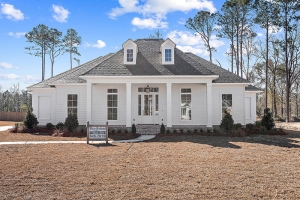
This custom built home is close to New Orleans in Covington.

In the second quarter of 2022 there was a increase to 49% in the share of prospective home buyers who are actively seeking a home to purchase. This comes after a decline for three straight quarters in a row. Rising interest rates have pushed many prospective home buyers righ tout of the market.

According to the NAHB's Housing Trends Report each region saw a different share of prospective home buyers who are actively searching for a home to purchase. The South was the only region that did not see a rise. As for the remaining three, the Northeast went from 50% in the first quarter to 54% in the second quarter, the Midwest went from 40% in the first quarter to 51% in the second quarter and the West saw an increase of 57% in the second quarter from the 46% that was reported in Quarter one.

The housing market has also seen a rise in availability expextations. We have seen a fall for the last five consecutive quarters so this is good news as it grew from 17% to 22% between the first and second quarter of this year. Along with availability expectations affordability expectations also increased. This has been the first increase since 2020 going from 19% to 23% from the first quarter to the second quarter.

Click Here For the Source of the Information.

Sunday, September 18, 2022

Inflation Concerns Are Down Causing a Drop in Mortgage Rates


According to Freddie Mac the mortgage rates have dropped due to the ease in inflation conerns. For the weekly period that ended August 18th, the 30-year fixed-rate mortgage came it at 5.13% which was a decline of 9 basis points.

Good news as this stops the 23 basis points jump that occured just one week prior. This year has seen rates have change rapidly and unpredictably. Since April, the 30-year rates have gone between 4399% and 5.81%. This is up from just a year ago when the 30-year average was 2.86%.

The rate drop also was seen through the average 15-year fixed rate. Currently it dropped to 4.55% from 4.59%. A year ago, the average for the 15-year fixed-rate was 2.16%. In fact, the average of the 5-year Treasury-indexed hybrid adjustable-rate mortgage fell 4 basis points to 4.39% from 4.43% week over week. At the same time last year, the 5-year ARM sat at 2.43%.  The catalyst to the decrease was due to the inflation not rising so much in July as economist predicted according to the Consumer Price Index.

"While both consumer and producer prices showed increases in July, the rate of increase slowed substantially," said Paul Thomas, vice president of capital markets at Zillow, in a research statement.

"Inflation appears to be beyond its peak, which has stopped the rapid increase in mortgage rates that the housing market was experiencing earlier this year," Freddie Mac Chief Economist Sam Khater said in a press release.

"The market continues to absorb the cumulative impact of the large price and rate increases that led to a plunge in affordability," Khater said, noting current levels are unlikely to change substantially.

"As a result, over the rest of the year purchase demand likely will continue to drag, supply will modestly increase and home price growth will decelerate," he said.

Click Here For the Source of the Information.

Friday, September 2, 2022

Property Setback an Important Building Restriction a Homeowner Should Know


 It is very important to understand what a property setback and how it can affect the home building process. This article will establish all you need to know about property setbacks.

What is a property setback?

A property setback is the distance required between your house and your property line. There are many things that will define the setbacks on your property such as the type of building, the property's shape, the reason you are using the lot, its height and its size.

“Property setbacks are the building and land use restrictions placed on parcels of property long before you bought it,” says Mike Powell, an engineer and certified home inspector in Tampa, FL. “These setbacks are put in place by city engineers when designing the parcels and common elements needed to subdivide the larger piece of land into smaller, more divisible units.”

Why setbacks are important

Setbacks are great for a homeowner and their neighbors allowing all parties to live comfortably. Setbacks can give ample space to replace or repair utilities and allow for first responders to have enough acess for emergencies. Other advantages are natural lighting, venilation, noise pollution and improved aesthetics.

“Setbacks ensure the functionality of the residence,” says Greg Covell, a Realtor with Re/Max Select Realty in Vancouver, British Columbia.

How to find out your home's setbacks

This is crucial when it comes to purchasing a piece of property to build on. Before you put in an offer, find out what the governing setbacks are for the property. Do your due diligence by contacting your town orr municipality or your local planning department.

“I had a sale pending the zoning approval of placing a barn outside the setback lines,” Denise Supplee, a real estate agent and founder of SparkRental.com says. “The zoning board gave a big no, and the property deal ended without a sale.”

Can a homeowner challenge setbacks?

Setbacks are not supposed to be a burden but rather a benefit for the community. These rules and regulations allow everyone to live comfortably with privacy. There are exepctions to the rules when it comes to setbacks. A homeowner can request an exception but it will more than likely involve a public hearing where neighbors can support it or oppose it.

“Obviously, engineers are incapable of fully anticipating future use, so setbacks may change over time,” says Powell. “For instance, a railroad line that has been abandoned for over 40 years may have been given a setback. The municipality may allow a variance to allow construction of your shed in the former setback location.”

What happens if you build on a property setback?

Just like any other law or ordinance it is against the law to ingore them. A homeowner that builds a structure on a setback will result in removing the structure at the homeowner's expense.

“If it happens to be a fence or a light structure, it may not be a huge problem,” Powell says. “If that building happens to be a reinforced concrete structure, the owner will have to swallow the expense of demolition and likely face additional fees or fines.”

Click Here For the Source of the Information.

Thursday, September 1, 2022

2021 Saw A Huge Increase in Single-Family Starts


According to the NAHB's Eye on Housing New single-family starts grew exponentially in 2021. In fact this is the fist time since 2013 there has been such a fast pace in single-family new home starts. NAHB's Survey of Construction (SOC) reported 1,133,145 new single-family were started in 2021. This is 14% higher than reported in 2020.

The South Atlantic, West South Centeral and Mountain Divisions saw the most new single-family units starts which represented 20 states plus Washington DC. This accounted for 41% of the country and over two-thirds of the total new single-family housing starts in 2021. The Pacific Division increased to 106,240 accounting for 9% and the East North Central Division went to 93,693 accounting for 8%.

The other divisions including East South Central, West North Central, Middle Atlantic and New England made up the remaining 16%. Four of the division grew faster than the national level which were the Middle Atlantic with a 26% increase, the East South Central Division with a 23% increas ehte West South Central Division with a 19% increase.

Click Here For the Source of the Information.


Saturday, August 13, 2022

Be in the Know When Building a Custom Home

 What are some things you should know about when building a custom home?

How to Pay for a Custom Home
What You’re Paying For
Finding the Right Contractor for Your Custom Home
Designing and Building the House

There are many in the housing market that would rather build a home than purchase a new construction home that has already been built. When you build a home you have all the say from start to finish. There are some things you need to know when building a home. Here are some of them that professionals say are important to know.


How to Pay for a Custom Home

If you are in the market to build a custom home, then you will probably be using a construction loan. This type of loan is a short-term loan that will cover all of your expenses while you are building your home. It is a bit lengthier and stricter than a regular mortgage but is perfect for a custom home build. Many people choose to do a construction to permanent loan. Once your home is built and ready to occupy, your loan turns into a standard mortgage loan. Remember that a construction loan is typically only for 12 - 18 months and the payment process is different from a standard mortgage loan.

What You’re Paying For

Remember there will always be extra expenses when building a custom home. These include plumbing, electrical wiring, lighting, internet configuration, and media hookups. There will also be many different industry professionals who you will also need to pay including plumbers, electricians, city inspectors, land surveyors and structural engineers. All this aside, your builder or contractor will reach out and coordinate with all of the suppliers and laborers.

Another cost that you might incur is by using an architect. If you need to have help with the design of your home, then you will need to hire one. If you do not want to choose a stock plan, then this will be the route you need to go.

Finding the Right Contractor for Your Custom Home

This is very important because they not only need to be a professional in the industry but also need to work with your personality. Choosing the right contractor or builder will make all the difference. To go about choosing one, first, start with word of mouth. A first-hand account is always the best. Before making your decision, interview several different contractors. Keep in mind that you will want them to be able to meet your timeline, agree with your vision and have a positive attitude about your design. As with any other interview, check references, read business reviews and google their name to see what comes up.

Designing and Building the House

This will take a good bit of time because your contractor will want to meet with you for several preconstruction meetings. Remember during these meetings to take notes, keep records and pay attention. This way you will be able to reference the plans that were agreed upon. Put the budget in your forethought as you go through your planning stages. It is very easy to get carried away and spend much more if you do not keep track. Always keep in mind if what you plan is good for resale. This can also affect your decisions. Even though it is a long and tedious process, at the end you will have your dream home.

Click Here For the Source of the Information.

Thursday, August 11, 2022

Questions a First-Time Home Buyer Should Ask Their Lender

 The current market is definitely a hard one to navigate especially for first-time homebuyers. When purchasing a home for the first time there are so many overwhelming important decisions to make. Here are ten questions to ask your mortgage lender when purchasing a new home.

1. How do I know what type of mortgage is best for me?

There are many options available and finding the right one for you is very important. Your mortgage lender can help you with the process of choosing which mortgage will be best for you. A mortgage lender can help you list the pros and cons of each loan option.

2. What kinds of mortgages do you offer?

There are two major types of mortgages which are conventional loans and government-backed loans. A mortgage lender can help you with choosing the best loan for certain circumstances. They can determine what type of loan you are qualified for.

3. How much should my down payment be?

Usually, a 20% down payment is preferred, especially if you want to avoid PMI (private mortgage insurance). If this is not a figure you can afford, a lender can work with you on the amount you can put down. Depending on what you are approved for, it can be as small as a 3% down payment.

4. What will my interest rate be?

This is usually the first question most people ask a lender. Your interest rate will determine how much you can borrow. There are fixed-rate loans and adjusted rate loans. A 1% difference does not sound like a big difference but it can save you a lot over the lifespan of your loan.

5. Do you offer a mortgage rate lock?

This is important because a rate lock can keep you at a predictable loan cost. This is basically an agreement between you and your lender that the interest rate will not change until closing. If the rates start to rise, this does not matter, you will still get the lower rate.

6. Are there income requirements for buying a home?

There are lending requirements. A lender can help you and they do this case by case with what you will need. It can depend on your credit score and your source of income.


7. Do you offer pre-approval or prequalification?

First, you need to know the differences. Pre-approval means that a lender has verified your income, credit score and assets through documents such as your W-2s, tax returns and bank statements. Prequalification is based on what you tell your lender about your income, assets and credit. Then your loan amount is based on an estimate.

8. What will the costs of closing be?

Closing costs are the fees for processing your loan. These will be paid to the lender. The appraisal fees, origination fees, attorney fees, and title insurance are included in the closing cost. Your lender will provide you with an estimate of closing costs based on the type of loan you go with.

9. What should I do to prepare my financials when considering buying my first home?

There are many things you can do to get your finances in order. Make sure your credit is in good standing. If not, find ways to strengthen your credit. Always determine your budget before you start the process. Do your shopping and compare rates. Always get prequalified before you start looking for a home.

10. Are you doing a hard credit pull on me today?

This is important to ask because a hard credit pull can have an effect on your score. Do not let a lender do a hard credit check until you have agreed to work with that lender.

Click Here For the Source of the Information.