Showing posts with label the Fed. Show all posts

Monday, December 28, 2020

Rates Stay Near Zero Due to Fragile Recovery

 The Fed has determined that rates will stay close to zero for several years to come due to the long recovery ahead from the pandemic. The key short-term rate was close to zero after the latest Federal Reserve policy meeting last Wednesday.


American consumers and businesses are struggling because of COVID-19 and will continue to struggle if Congress, the White House and the Fed do not do more to help stimulate the country’s economy.

The Federal Reserve has already slashed the interest rates and started many lending programs as well as other stimulus efforts to support the national economy. It will continue to buy Treasury bonds and mortgage-backed securities.

“Economic activity and employment have continued to recover but remain well below their levels at the beginning of the year,” the Fed said in its statement.

The Fed believes that the course of the virus can determine the path the economy will take. There is hope from the American people with the COVID-19 vaccines becoming available. People will begin to go back to normal spending habits and activities.

The country’s gross domestic product is anticipated to a 4.2% rebound next year. The Federal Reserve also predicts the unemployment rate will go back down to 5% in the year 2021.

“With vaccines on the horizon, the Fed’s economic projections for the next few years all got an upgrade, but don’t gloss over the immediate challenges still confronting the economy,” said Bankrate chief financial analyst Greg McBride in a report after the Fed announcement.

Click Here For the Source of the Information.

Thursday, May 21, 2020

Mortgage Rates to Stay Near Historical Lows in May

The Federal Reserve has stepped up to ensure the rates stay near historical lows. During the policy meeting held on April 29th, the central bank said they would keep buying mortgage-backed securities to allow credit to keep flowing.

Jerome Powell, the Federal Reserve’s chairman, says the Fed will keep purchasing the mortgage-backed securities for “the next year or so” with the unknown economic consequences from the COVID-19 pandemic. The Fed said in its most recent announcement that it foresees “considerable risks to the economic outlook over the medium term.”

The Fed has brought a lot of money to the table when it comes to mortgage-backed securities. In a comment, the Federal Reserve relayed this was necessary “to support smooth market functioning.” Before the Fed stepped in, mortgage rates fell during late February but took a turn up in March because of the market turmoil.

The Federal Reserve has purchased more than half a trillion dollars’ worth of mortgage-backed securities since the middle of March. According to the Fed purchasing these mortgage-backed securities has given lenders the confidence that there will be enough money to keep funding mortgages to consumers. The mortgage rates will stay stable because the Federal Reserve is standing in as a reliable buyer.

Luckily there strategy is working. Currently, the average rate on a 30-year fixed-rate mortgage is 3.389%, a 15-year fixed-rate is at an average of 2.923% and the average for the 5/1 ARM is down to 3.117%. During Nerdwallet’s survey of mortgage rates, they found that the 30-year fixed-rate mortgage is 88 basis points lower than this time last year.

Click Here For the Source of the Information.

Tuesday, March 31, 2020

Fed Supports A Smooth Market

The Federal Reserve will address the strains in the market for Treasury securities and agency mortgage-backed securities. The Fed wants to ensure a positive flow of credit to residents and businesses throughout the country.

During their announcement, they revealed they would “purchase at least $500 billion of Treasury securities and at least $200 billion of mortgage-backed securities.” The Feds also proposed an
establishment of a Main Street Business Lending Program that will support lending to qualifying small and medium-sized businesses.

“The Fed’s action represents an open-ended and unlimited expansion of quantitative easing to control interest rates,” said NAHB Chief Economist Robert Dietz. “The central bank’s role of lender of last resort has been expanded to be buyer of last resort in order to support liquidity and the operation of financial markets. The Fed clearly intends to use its full powers to support the economy during an extremely disruptive phase.”

During this time, the central bank will take many steps to see this plan to fruition. They will establish new programs that will support the flow of credit to consumers, employers and businesses in the US. They will provide $300 billion in new financing and the Department of the Treasury will use the Exchange Stabilization Fund (ESF) to provide $30 billion.

There will be three facilities in total. They will create the Primary Market Corporate Credit Facility (PMCCF) which will support new bond and loan issuance. The Secondary Market Corporate Credit Facility (SMCCF) will supply liquidity for outstanding corporate bonds. The third will be called the Term Asset-Backed Securities Loan Facility (TALF) which will support the flow of credit to consumers and businesses. This third facility will issue ABS (asset-backed securities) that are supported by student loans, auto loans, credit card loans, SBA (Small Business Administration and other established assets.

“The Federal Reserve is committed to use its full range of tools to support the U.S. economy in this challenging time and thereby promote its maximum employment and price stability goals,” as stated in a press statement on the Federal Reserve website.

Click Here For the Source of the Information.

Tuesday, December 17, 2019

Interest Rates Hold Steady For 2020

To aid in the country’s economic expansion, the Federal Reserve announced they are holding interest rates between 1.5% and 1.75% at the December meeting. There will be no more rate cuts but this is a positive, shifting the fears that there will be a recession.

With the nation’s economic expansion in its 11th year, the Fed will watch closely to the U.S.Federal Open Market Committee’s policy-setting body, thirteen agreed with keeping the rates steady going into the new year. Only four on the committee feels that rates should be increased.
economy. Of the seventeen participants on the

Federal Reserve Chairman Jerome Powell is also in agreement with keeping interest rates level. According to Powell, “the Fed can hold rates steady, because historically unemployment has been able to remain at very low levels for an extended period of time without having an effect on inflation.”

The Commerce Department announced in the meeting that consumer prices are up by 2.1% over 2019 but overall  inflation has remained below the Fed’s 2% target range. Powell comments that the monetary policy is in a “good place”. The Fed’s predict the US economy will grow at 2.2% and slow to 2% the next year.

Although the global economic growth is sluggish and there is uncertainty with global trade, the US economy is a “star performer” says Powell. This is thanks to the nation’s strong consumer spending and steady job growth.

Click Here For the Source of the Information.


Monday, September 30, 2019

End of September Seeing Lowered Rates

The year is coming to an end and we have now seen the second cut in rates in 2019. The Federal Reserve announced that there will be a reduction in the key, short-term federal funds rate by 25 basis points to a top rate of 2%. The cut stems from a set of increases enacted in 2018.

Another big move on the Fed’s part was a reduction in the interest rate it pays on bank reserves. This move came in hopes to improve the ability of the Fed to target the federal funds rate in markets.

Concerns in the future economy has the Fed’s leadership in disagreement and their hold on the interest rate it pays on bank reserves in a weaker state. Fed regional presidents, members of the FOMC, had a disagreement that was the highest number since the year 2014. Three of the Fed regional presidents voted no for the change in in the rate. Two opposing it altogether and one urging a 50 basis point reduction.

Even with a few concerns the Fed’s still believe the labor market is strong and the economy is still rising at a “moderate” rate. This fares the same in the home building industry. Household spending is still going strong.

The action of reversing the high cycles of 2018 has been a positive in the decline in rates this year. This has been a net positive for what the future holds for the housing demand and home construction. This comes off the 10-year low for housing affordability that occurred last Fall.

The National Home Builders Association forecast there will be another cut before year end.

Click Here For the Source of the Information.

Wednesday, July 13, 2016

Interest Rates to Remain the Same According to the Fed

A unanimous decision by the Federal Reserve the first week of June declared that interest rates would remain the way they were. This decision was made after reports revealed that the labor market is still not showing a strong recovery.  Even though there are still job gains across the board, they are slow and business investment has also not picked up.
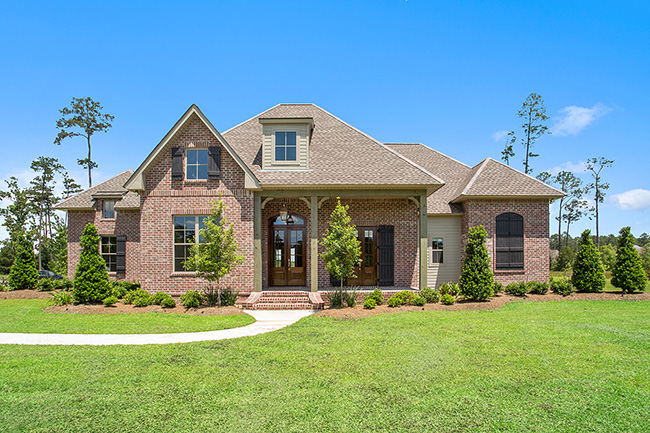
1-Lot 207 Singing Rivers Front ExteriorHome buyers have enjoyed and even taken for granted interest rates that are historically low for the past 10+ years.  For those buyers who have been able to recover and succeed after the Great Recession, it is still one of the best times to buy a new home or buy an existing home in today’s housing market.

Predicted Rise in Interest Rate

Originally, the “Fed” had predicted that there would be two more rate hikes of the interest rate during 2016, but June’s meeting saw 6 members stating that with the slow growth of the economy, they only would really commit to a possibility of one more interest rate increase, citing the normalization of monetary policy taking a longer period of time than expected.
The good news is that the unemployment rate went down by 4.7%, but the gain of jobs in May, 2016, was only 38,000.  Also, the job increases reported in March and April were revised down by 59,000 – a loss of 458,000 in the labor force.

Strong demand still exists for employees and contractors in the residential construction sector.  The BLS JOLTS data shows that builders have approximately 200,000 unfilled positions.  However, during the course of April and May, 9,600 jobs were lost in the residential construction industry, and these jobs are now having to be refilled.

First-Time Home Buyers

Because of the cost of labor and materials to build a new home, first-time home buyers are finding it hard to acquire a new home.  Homes that are priced less than $150,000 account for only 6% of the market according to the National Association of Home Builders.  Currently approximately 31% of the home buyers surveyed expected to be able to pay less than $150,000 for their new home.

New home buyers in the market to purchase a new home will still benefit greatly from the significantly and historically low interest rates.  Any rise in the interest rate in 2016 will still probably keep the interest rate low enough to have affordable house payments.

Click Here for the Source of the Information.

Thursday, January 14, 2016

Record Low Interest Rates to Increase With Fed Decision

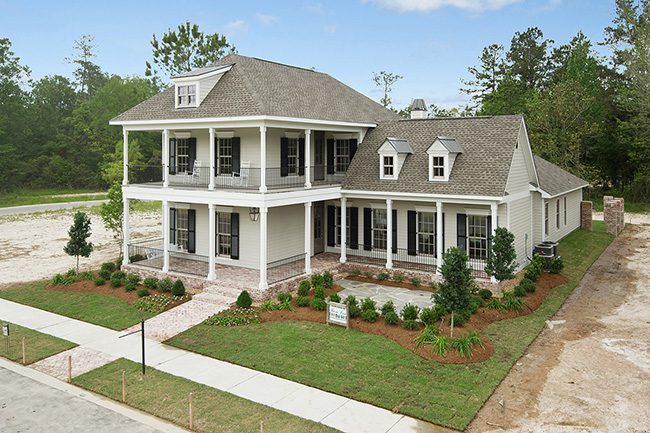
1-lot-199-bedic-creek-exterior-front-1Real estate is selling fast and prices are still competitive.  Builders and homeowners alike have taken advantage of the great rates seen after the 2008 economic crunch. These record low interest rates might soon be a thing of the past.  The Federal Reserve has decided it’s now time to rethink the rates because the economy is stronger, and more people are in a position to borrow money.  The Fed already bumped the key interest rate up by 0.25% in December 2015.

Fortunately the Fed plans to raise the rates at a slow, steady pace.  In fact, this is the first rate hike in almost ten years. Even with the slow increase, everyone will be affected. Anyone who has a credit card, savings account, invest in a 401(k), invest in the markets, or wants to make a big purchase with a loan needs to know how the rate increases will affect them.

Just because there has been a raise in the rate does not mean you should rush out and make a big purchase tomorrow.  Owning a new home is a big deal and you should research to find the right one that suits you.  Even if the rates are higher in a year, they still will be lower than historical averages.
“Rates are pretty low and they’re not going to change much in the short term,” says Dean Croushore, a University of Richmond professor and former Fed economist. Do start your research now and pay attention to the Fed’s actions.  If they do start to increase rates out of your comfort zone, it might be time to make that leap into home ownership.

2015 Parade of HomesYears ago many remember the advantages of putting their hard-earned cash into a savings account.  It would yield them a little bit of extra cash on top of what they had saved – imagine that!  In the past decade there has been almost zero interest earned.  With the Fed’s rate change, we will also see a higher interest income on your deposits. So a benefit to the rate increase means an increase on the money you put away in your savings account.

Not so smooth sailing for the stock markets. This Fed hike could cause major ups and downs in the stock and bond markets.  This trigger coupled with failing oil prices, China’s continued economic slowdown and decisions made by central banks around the world should be of great concern. According to MSCI Emerging Market Index, the stock market performance was down approximately 20% at the end of 2015.

With the new year comes good news for the U.S. dollar. The increase in the interest rate is predicted to make the dollar stronger. While the dollar is gaining many other global currencies are lowering.  This will have a negative impact on the global economy. U.S. companies will lose money on products sold in other countries.  Investors are already putting all of their money in U.S. investments rather than putting some money into global investments. The U.S. manufacturing sector has already shrunk due to the weak global economy.

All in all it seems to be more good news than bad for those wanting to invest or make big purchases such as a new home. “We’ve come a long way from the depths of the recession, but we’re still not quite back to where we’d like to be,” says Croushore, the former Fed economist.

Click Here for the Source of the Information.