Showing posts with label home builders. Show all posts

Wednesday, November 10, 2021

Summer 2021 Saw An Increase in Single-Family Permit Gains


According to the National Association of Home Builders, the first 8 months of 2021 reported 775,772 single-family permits issued year-to-date. Compared on a year-over-year basis the end of summer 2021 saw a 25.8% increase over August 2020.

All four regions of the country reported increases. The highest in the Northeast was at 29.3% and the lowest was in the Midwest at 21.6%. The remaining regions were as follows the South at 26.4% and the West at 25.7%. Multifamily was also on the rise with 33.7% in the West, 27.2% in the Northeast, 24.9% in the Midwest and 24.6% in the South.

The same goes for all 50 states and the District of Columbia which reported increases across the country. The highest was in the District of Columbia with an increase of 208% from 87 to 268. The total of the 10 highest states was 62.3%

At the local level, below are the top 10 metro areas that issued the highest number of single-family permits.

Metropolitan Statistical AreaSingle-family Permits: Aug (Units #YTD, NSA)
Houston-The Woodlands-Sugar Land, TX36,359
Dallas-Fort Worth-Arlington, TX35,572
Phoenix-Mesa-Scottsdale, AZ25.209
Atlanta-Sandy Springs-Roswell, GA22,768
Austin-Round Rock, TX17,375
Tampa-St. Petersburg-Clearwater, FL13,603
Charlotte-Concord-Gastonia, NC-SC13,174
Orlando-Kissimmee-Sanford, FL12,068
Nashville-Davidson–Murfreesboro–Franklin, TN11,482
Jacksonville, FL11,400

Click Here For the Source of the Information.

Thursday, April 30, 2020

Ways Builders Are Increasing Energy Efficiency

Home Energy Rating System (HERS) Index is the standard that is used in the industry to measure a home’s energy efficiency. This system is nationally recognized and is used across the country when inspecting and calculating a home’s energy performance. Homebuilders today are finding ways to make sure the homes they are building have low HERS scores.

HERS Index standard scores are determined using energy modeling software. The most common HERS Index score in 2019 was 58 (the standard ranged was between 45 and 80). When building a
home, the lower the score, the more energy-efficient the home is. Here are some useful tools builders are using to make sure their new construction homes are energy efficient.

Builders are using specific heating equipment. In recent studies, ground source heat pumps had the lowest score ranges. Air source heat pumps had the best scores overall which ranged between -20 and 5. Traditional furnaces had high scores ranging from 25 to 70 and electric resistance heating scored the highest ranging 75 or higher.

Heating and cooling efficiency also plays a part. Seasonal Energy Ratios (SEERS), as well as the Annual Fuel Utilization Efficiency (AFUE), play a big part. Homes that scored lower on the HERS index from 25 to 40 had SEER ratings of 17-24. Homes with a SEER around 14 scored a high HERS index score of 45 and above. For an Annual Fuel Utilization Efficiency in the mid-80s, the HERS score ranged from 70 – 75. For a lower HERS score (below 55) the AFUE will need to be 90 and above.

Another tool to look at is the mechanical ventilation type. To achieve a HERS score of 40 and below, most homes must only have Energy Recovery Ventilators (ERVs) and Heat Recovery Ventilators (HRVs). Homes with HERS scores that range between 40 and 50 had exhaust only and those with HERS scores between 56 and 80 had air cyclers only.

Solar photovoltaics (PV) is a specific technology that changes sunlight into direct current electricity by using semiconductors. How it works is when the sun hits the semiconductor (within the PV cell) electrons are freed and the form an electric current.  Homes with PV had a HERS score of 30 and below. Homes without the solar photovoltaics had a Home Energy Rating System Index score of 40 and higher.

Homebuilders have vast resources when it comes to building an energy-efficient home. When a builder combines multiple efficient products with sound building science principles they will have a greater potential for building a great energy-efficient home.

Click Here For the Source of the Information.

Monday, December 30, 2019

2020 Is The Year For Millennial Home Buyers

“After a decade of cocooning, millennials want to buy homes that represent value, which is in keeping with the way they shop for everything else,” CNBC’s Jim Cramer said. “The delay in … homebuying is over, the spending is just beginning.”

The year 2020 will bring a new era to dominate the housing market. According to CNBC.com, ” Millennials are expected to be the largest single cohort of homebuyers in 2020.”

“People who have jobs and feel confident in the future are taking advantage of affordable luxury
wherever they can find it,” Cramer said. “I think that gives you great insight into the behavior of millennials, or at least the millennials who have money to spend.”

This generation, born between 1981 and 1997, make up around 33% of the homebuyers which is up from 20% just five years ago.

“In fiscal year 2019 over 20% of our closings had one purchaser 35 years old or under,” CEO of Toll Brothers Doug Yearley said.

Toll Brothers is the nation’s leading builder of luxury homes. The company builds in 23 states and the District of Columbia. The company had a strong fourth quarter in 2019. They reported earning $1.41 per share on revenue of $2.38 billion. Toll Brothers sold 2,672 units in home sales that totaled $2.29 billion in a three-month period.

Toll Brothers is focusing its affordable luxury communities on move-up, active adult and millennial
buyers. The older more affluent millennials have been the biggest factor in this decision.
“This market is strong and demographics suggest it will grow over the next decade as millennials mature,” Yearley said.

Another big homebuilder, Taylor Morrision, agrees that millenials are on an upward trend when it comes to homebuying. The homebuilder, which builds in nine states among the south, southwest and midwest regions, reports that a good majority of their homebuyers are millennials.

“People who have jobs and feel confident in the future are taking advantage of affordable luxury wherever they can find it,” Cramer said. “I think that gives you great insight into the behavior of millennials, or at least the millennials who have money to spend.”

Click Here For the Source of the Information.


Monday, October 21, 2019

Reasons Why the Biggest Housing Boom in History Is Just Beginning

The year 2006 brought one of the most profitable side jobs for Americans, flipping houses. In fact, that year, it was reported that one in over ten homes purchased were to flip. In 2008, it all came crashing down. Many went bankrupt because they were stuck with owning flips that were on the fast pace to a dramatic depreciation in value. The housing crash not only affected the housing market, but also caused Americans to lose their jobs and businesses. Fortunately things are turning around for the housing market. Today, housing stocks are one of the best investments out there.

According to Forbes.com housing stocks are currently booming. NVR Inc., a homebuilder, is a slam dunk. It was reported that in February 2019, NVR stocks were at a 45% gain beating the S&P 500 at 10%. Those that purchased the stock back in February have made a lot of money. According to the site’s research, housing stocks will be the way to go for years to come.

Another two stocks to invest in are Vulcan Materials (VMC) and Martin Marietta Materials (MLM). Both companies sell concrete and gravel which is used a lot in the house building industry. Homebuilders use both for housing
foundations, roads and sidewalks. According to the chart, these two stocks have rocketed in the past year. Revenues in the company are rising and hitting all-time highs.

Housing expert Barry Habib, founder and CEO of MBS Highway, has the insider knowledge from the top players in the US housing market. The biggest issue he sees is supply and demand. Since 2009, only 900,000 homes have been built per year. Habib says this is the lowest inventory since the 1950’s. This is one of the biggest
housing shortages we have had. He says that with existing inventory, it would take under six months to sell everything currently on the market.

“The most important driver of home prices is supply and demand. And right now, there is a chronic undersupply of homes in America,” Habib stated.

Habib believes the market is about to be flooded with homebuyers. Millennials have been recorded to be the biggest generation the country has seen. The National Association of Realtors states that one in three homebuyers today is a Millennial.

“On average, folks buy their first home at age 33. Guess what the median age of Millennials is right now? 34. In the past year or two, the first wave of young homebuyers came into the market. But every year for the next decade, tens of millions of Millennials will hit home-buying age.”

This flood will definitely play an important role in the prices of homes. Supply and demand is the most important driver for home prices. With such a tight supply in inventory the housing market will continue to boom.

What does that mean for homebuilders? They will have job security for a while to come. This fall, new home starts rose to their highest level since the summer of 2007 and building permits are at the highest level since the spring of 2007. Habib believes “the American housing boom has years to run.”

Click Here For the Source of the Information.

Thursday, October 26, 2017

Builder Confidence High for the Month of October

A jointly sponsored survey from the National Association of Home Builders (NAHB) and Wells Fargo to a selection of builders in the United States rates builder confidence in three different areas: current sales conditions, prospective buyers, and expectations for future sales. The results of this survey are published each month in the NAHB/Wells Fargo Housing Market Index (HMI). Any rating by builders that is higher than 50 is considered a positive sign. During October, 2017, the builder confidence index rose to a total of 68 for all three categories, which is the highest level it has
been since May of this year.  March – June are considered some of the best months for real estate, so to have this high of a score during October from builders is a very positive sign for the real estate industry as a whole.

“This month’s report shows that home builders are rebounding from the initial shock of the hurricanes,” said NAHB Chairman Granger MacDonald, a home builder and developer from Kerrville, Texas. “However, builders need to be mindful of long-term repercussions from the storms, such as intensified material price increases and labor shortages.”

It is also interesting to note that builder confidence is so high when the hurricanes have eaten up a lot of the construction labor available to builders with flood restoration and home repair.  Some construction companies have one year and year and a half waiting lists for hurricane-related home repairs. In fact, the typical number of new home permits issued in Houston in a year has been surpassed by the number of permits requested for home repairs.

The price of lumber is also up 21% and is expected to continue to rise. However, builders are also seeing a surge in demand for new homes after the hurricanes, so this has probably helped with builder confidence levels during this month.

The exact numbers of the three survey factors are as follows: current sales conditions rose five points to 75. Sales expectations over the next six months also rose five points to 78. The component measuring buyer traffic rose just one point to 48 and is the only measure in negative territory.

Click Here for the Source of the Information.

Friday, July 22, 2016

New Construction Jobs Support Overall GDP

Home building generates a substantial amount of money for local governments and the federal government just by the nature of the industry.  According to the National Association of Home Builders, approximately 90,000 different governments receive approximately $111 million in taxes and fees from the construction and building of 1,000 single-family homes.

Sub-Contractors Contribute Greatest Share

In addition to the governments making a substantial amount of money from home building,
sub-contractors also are reported to make consistently higher wages because of home building.  One of the reasons for this is that sub-contractors actually do the work themselves instead of hiring the jobs out to employees.  Because sub-contractors make up the majority of the workforce when building a new home, the taxes on profit then paid by these sole proprietors also contribute greatly to the overall economy.

Tax Breakdown

The amount of taxes paid to the federal government is comprised mainly of income taxes and social security equaling an amount of $74.4 million.  State and local income taxes comes to $10.3 million, and city and county taxes equal approximately $6.9 million.  Other taxes consisting of impact fees, permit fees, and other fees for new construction bring in a total of $13.7 million.

A breakdown of industries which bring in the revenue shows that construction has the most jobs, and other affiliated companies related to construction such as manufacturing, bring in other revenue.  Other affiliated businesses include trade, transportation, warehousing, finance, insurance, real estate sales, rental and leasing, and professional, management, and admin services. A total of 2,975 jobs are created from building 1,000 single-family homes based on full-time jobs over one year.

Click Here for the Source of the Information.

Wednesday, November 18, 2015

New Home Buyers Have More Selection in New Homes

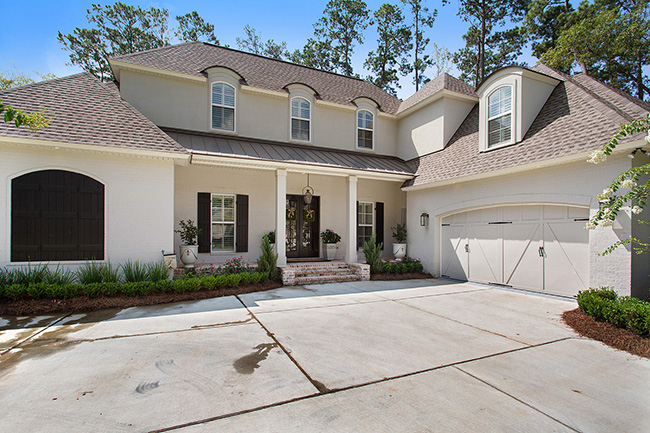
79 Oleander Carriage Style GarageEven though the housing market has been making incredible strides in its recovery since its low in 2008, one of the major obstacles that has been holding the sale of real estate back is the lack of supply for the growing demand of home buyers.  New home buyers especially have been stymied by a lack of inventory from local builders.  Builders themselves have been frustrated by the tightened funding requirements for construction loans from banks and lenders, so there is been a “stalemate” of sorts going on in the new home industry.

However, good news is on the horizon for real estate because single-family home starts have been on the rise and holding steady over most of the months of 2015.  Single-family home starts remained steady from August to September with 740,000 starts nationwide for both months.  Overall, housing starts (including multi-family housing) increased by 6.5% and reached the 1.2 million mark – the highest its been since October, 2007.

From a yearly perspective, quarter-over-quarter, single-family home starts are up 5.7% 3rd quarter from second quarter with a total of 746,000 home starts.  The numbers year-over-year show that single-family home starts are up 11% compared to 2014.

Another strong sign of new home real estate recovering is the number of housing permits for single-family home starts.  The number of permits for single-family homes went up 9.4% year-over-year and also remained unchanged compared to the previous month of August from September, 2015. Trends also show that money of the new home purchases are coming from “contingency sales” where a home buyer has a house to sell and wants to build or buy new which is excellent news for new home builders.

Click Here for the Source of the Information.