Showing posts with label National Association of Home Builders. Show all posts

Monday, October 24, 2022

SINGLE-NEW FAMILY HOMES ARE BUILDING IN THE SMALLER MARKETS

 According to the National Association of Home Builders (NAHB) Home Building Geography Index (HBGI) we are seeing a change in the locations of single-family home builds. The building activity in the last 30 months shows a decrease in building in metro areas, largely due to COVID, housing affordability and highly regulated markets.
“The geography of home building has shifted over the last two and a half years, with more single-family and multifamily construction occurring in lower-density markets.  This shift was first caused by the initial impact of COVID shift continued in recent months due to housing affordability conditions that are causing both prospective renters and buyers to expand their geographic search for housing, aided by hybrid work patterns that allow for a combination of remote office work,” said NAHB Chief Economist Robert Dietz.

Another wrench in the system is the problem with getting building materials, construction labor shortages and and the Federal Reserve’s stingent monetary policy.  “Looking at the last 12 months, single-family production has slowed in all regional submarkets, both large and small, due to ongoing building material production bottlenecks, construction labor shortages, and the Federal Reserve’s tigtening monetary policy,” said NAHB Chairman Jerry Konter, a home builder and developer from Savannah, Georgia.

The National Association of Home Builders Home Buidling Geography Index (HGBI)  is a quartley measurement of building conditions across the country and uses county-level information about single-and-multifamily permits to gauge housing construction growth in various urban and rural geographies.  The National Association of Home Builders tracks single-family and multifamily grow rates and market shares in all seven regions of the U.S. The HGBI takes the place of the of the Leading Market Index (LMI).  The LMI would base their findings off single-family housing permits, employment, and home prices.

Currently it is report that the market share for single-family home builiding in large metro core and inner suburbs too a dive from 44.5% to 41.6% from the fourth quarter of 2019 to the second quarter of 2022.  This shows the precovid vs postcovid figures, accounting for the results due to COVID. In the outer suburbs of large and medium metro areas has jumped up from 17.4% to 19% during the same time period as the decrease in the larger areas. The share also increased from 28.8% to 29% in the small metro core counties and in rural areas it rose from 9.4% to 10.4% This is mainly due to homebuyers wanting to move away from the dense areas during COVID.

Click Here For the Source of the Information.

Wednesday, July 13, 2022

Rising Home Purchases Means Bigger Spending on Remodeling, Appliances and Furnishings

 According to the data found in the Consumer Expenditure Survey (CES) data from the Bureau of Labor Statistics (BLS), the National Association of Home Builders says that new home buyers and existing home buyers spend thousands of dollars or more on in the first year of owning a home on appliances, furnishings and remodeling. This estimate is derived from the pre-pandemic (2017 - 2019) data collected.


NAHB's report found that during the first year after the purchase of a new construction home, a homeowner will spend on average over $9,250 on their home over a non-moving home owner, and those that purchased an existing home spent around $5,240 over non-moving homeowners. This shows that a home purchase causes an increase in spending. These expenditures are mostly on things like appliances, furnishings, and remodeling.

New home buyers also spend a lot more on property alterations and repairs.  A typical new home buyer is estimated to spend almost twice as much on these projects ($9,288) compared to a similar household that stays put in a house they already own. When looking closer, the study showed that these expenses were from building outdoor features such as a pool, patio, fences, and landscaping.

When someone moves into a new home, they also want to have some new furnishings. This also triggers bigger spending. It is estimated that a new home buyer spends around $3,000 or more on furnishings during the first year of owning a home and $1,870 on appliances.

If a new home buyer purchases an older home, this price can go up even more. It is estimated that they tend to spend around $5,238 more on remodeling, furnishings and appliances. The majority of the spending is on property repairs, alterations and remodeling projects. Homeowners that do not move will spend around $4,282 in a year on home projects while those that buy existing homes will spend around $7,400 during the first year after closing. The data shows that home buying does spark additional spending.

Click Here For the Source of the Information.

Monday, May 16, 2022

March Sees a Rise in Private Residential Construction Spending

 According to the National Association of Home Builders (NAHB) there was a 1% rise in private residential construction spending from February's 0.7%. Total private residential construction spending was 18.4% higher than it was a year ago and spending was at a seasonally adjusted annual rate of $882 billion.


The rise is the result of the strong growth of spending on improvements and single-family. Single-family construction spending was up 1.3% over February estimates with an increase to $472.6 billion. This is great news since the home building industry is still facing supply chain issues and labor shortages.

There was a decrease however in the private nonresidential construction spending to a seasonally annual rate of $497.6 billion which was down 1.2% from February estimates. This still is not bad since it is 8.5% higher than a year ago. The highest increase in this category was in manufacturing at $22.7 billion.

The National Association of Home Builder's construction spending index shows a great rebound back to pre-COVID-19 numbers. The NAHB construction spending index illustrates the solid growth in single-family construction and home improvement from the second half of 2019 to February 2020.

Click Here For the Source of the Information.

Monday, September 20, 2021

Housing's Growth According to NAHB's Eye on the Economy


June 2020 saw a small decline in single-family new home sales to around 6.6% according to the National Association of Home Builders Eye on the Economy. The annualized rate fell to 676,000. Although the past several months have seen a small monthly decline, the new home sale is still 13.5% higher on a year-to-year basis from 2020.

The small decline according to some industry professionals is from the lack of inventory and the higher construction costs while other industry leaders believe it is caused due to the higher new home prices. New home prices have risen 10% since January 2020.

The new home inventory is down by 44% which is a little over 34,000 homes over the last year. Supply factors including the material, labor and lots are holding builders back. The survey also indicated that today's buyers are not happy with housing affordability. In fact, the share of buyers who can afford less than half the homes available for sale worsened from 63% at the end of 2020 to 71% by midyear.

Although the market is still going strong, those who did not purchase during the second quarter of 2021 was due to pricing. The higher construction cost and development costs have hindered housing prices. The GDP growth for the second quarter was at a low of 6.5%. The good news is that NAHB is predicting an overall growth rate of just under 7% for the whole year. This will be the best rate seen since 1984.

This is still a good time to buy as mortgage rates are still reasonable. If you are in the market for a home, contact your local Realtor.

Click Here For the Source of the Information.

Thursday, May 13, 2021

STRONG BUYER DEMAND BUILDS UP BUILDER CONFIDENCE


The latest National Home Builders Association/Wells Fargo Housing Market Index (HMI) reported that builder confidence increased in April 2021. For newly-built single-family homes, builder confidence was at an 83 in April.

The NAHB/Wells Fargo HMI surveys builders’ views on how the current single-family home sales and sales expectations for the next six months. The builder's rate as good, fair or poor. When asked about the traffic seen of prospective buyers, they rate it as high to very high, average or low to very low. Once the data is collected,  scores for each component are then used to calculate a seasonally adjusted index where any number over 50 indicates that more builders view conditions as good than poor.

Today’s market is seeing an 88 for current sales conditions even with the high lumber prices and supply chain problems. For the traffic of prospective buyers, there was a three-point gain to 75. As for the different regions the Northeast was at 86 points, the South at 83 points, the West at 90 points and the Midwest came in at 78 points.

“Despite strong buyer traffic, builders continue to face challenges to add much-needed housing supply to the market,” said NAHB Chairman Chuck Fowke. “The supply chain for residential construction is tight, particularly regarding the cost and availability of lumber, appliances, and other building materials. Though builders are seeking to keep home prices affordable in a market in need of more inventory, policymakers must find ways to increase the supply of building materials as the economy runs hot in 2021.”

“While mortgage interest rates have trended higher since February and home prices continue to outstrip inflation, housing demand appears to be unwavering for now as buyer traffic reached its highest level since November,” said NAHB Chief Economist Robert Dietz. “NAHB’s forecast is for ongoing growth in single-family construction in 2021, albeit at a lower growth rate than realized in 2020.”

Click Here For the Source of the Information.

Monday, April 19, 2021

Suburbs Are The Place To Be

 The National Association of Home Builders NAHB recently did a survey that revealed 25% of home buyers have changed their home buying preferences due to COVID-19. The survey found that home buyers are looking to the suburbs because of the health crisis. Thiry percent of buyers are seeking a home in the outlying suburbs. Before the pandemic, only 26% of home buyers wanted to purchase a home in the suburbs.

This does not bode for other locations. All of the other location points saw no change or small declines in buyer's preferences after the onset of COVID-19. Rural areas went from 24% down to 23%, downtown in a central city, dwindle from 12% to 11% and those who desired a home in the central city outside of downtown remained at 9%.

Buyers should enlist the help of a Realtor. A local sales agent will know the suburbs and can help you find the perfect home of your dreams. They will be able to help find a home in the perfect community for the perfect price.

Click Here For the Source of the Information.

Wednesday, February 17, 2021

2020 National Green Building Standard: Understanding Land Use Updates

 The ICC 700-2020 National Green Building Standard® (NGBS), had important updates to a couple of key sections regarding land use and housing development. According to the National Association of Home Builders, it is important for builders to take notice of these changes. Although there is continuity from the 2015 NGBS in many areas, understanding the changes and new offerings will enable developers and builders to determine the compliance path that works best for their project.

In Section 4 of the 2020 National Green Building Standard site design and development are defined. This section will give points for sustainable land development that is ultimately planned for residential construction. This section was created to help reduce detrimental environmental impacts by enhancing the natural features and improving the quality of the site.


A builder can earn between one to four stars for the number of points earned by the certification defined in Section 4. In the spring 2020 edition, changes were made to Subsection 403.6 Landscape Plan, Subsection 403.7 Wildlife Habitat and Subsection 405.11 Insect Mitigation.

Subsection 403.6 Landscape Plan allows up to an additional 28 points. The new categories in the 2020 update include points for spray irrigation and third-party qualified water-efficient grasses. An example is Turfgrass Water Conservation Alliance (TWCA) which limits water and energy use anywhere turf is planted.

Subsection 403.7 Wildlife Habitat allows up to an additional 6 points. Points are awarded on the design of sites abutting wildlife corridors, fish and game parks, or preserved areas. An example of this would be the outdoor lighting that would be close to the wildlife habitat.

Subsection 405.11 Insect Mitigation is a new category that has been added to the 2020 NGBS. A builder can receive up to 19 points for landscaping that helps reduce insect-borne disease.

Section 5 includes lot design, preparation and development. The points earned in this section have increased in the 2020 NGBS in subsection 503.1 Natural Resources, 503.4 Stormwater Management and 503.5 Landscape Plan to 19 points. Also, the following subsections have been added in 2020, 505.7 Multi-Unit Residential Compressed Natural Gas (CNG) Vehicle Fueling which allows 4 points, 505.8 Street Network gives an additional 5 points and 505.10 Exercise and Recreational Space gives up to 9 points.

Other notable changes made between 2020 and 2015 NGBS are that 2020 verifies practices via the Environmental Protection Agency, the International Wildland Urban Interface Code and the Turfgrass Water Conservation Alliance (TWCA). The 2020 National Green Building Standard® is a great tool for builders to work with and helps improvements on the development of land and lots. The standards give builders and land developers the flexibility needed to develop land and lots that are sustainable, cost effective and appropriate for their geographic location.

Click Here For the Source of the Information.

Tuesday, January 19, 2021

Home Owners Focus on Home Improvement Over Travel and Entertainment

The recent pandemic has changed home owner’s points of view on many aspects of homeownership. HomeAdvisor’s latest survey “State of Home Spending”, showed the average spent on home-improvements in 2020 rose to $13,138 from 2019’s $9,081.    

Although the survey says higher cost in labor and materials contributes to the higher number, it still shows an increase in American home owner’s spending average on actual home improvements. The National Association of Home Builders (NAHB) reported that 85% of Americans are spending more time at home because of COVID-19. Their spending habits are shifting from travel and entertainment to home improvement projects.

The housing market is hot and the increase in home buying has also fueled home improvement spending. Millennials, (those closest to the median age of first-time homebuyers) have been reported to have increased in home buying.

“Homeownership rates for millennials have jumped significantly, especially as COVID-19 has reemphasized the importance of the home and many companies move to flexible work location options,” said Mischa Fisher, chief economist at HomeAdvisor, in a press release. “Millennials are not only rapidly becoming home owners, but they are also spending more on home improvement than any other generation when they do.”

Those projects that have been important in 2020 have changed from those in 2019. The top 2020 projects were interior painting, bathroom remodels and new flooring installations. The top project which has made the list the last several years did not even make it onto the 2020 list. Prior years those that were surveyed by HomeAdvisor said that room remodels were the most important project.

The home maintenance project that saw the biggest increase year-over-year was cleaning and landscaping. The more everyone was at home with the stay-at-home orders, the messier the home could get. Cleaning and landscaping saw an increase from $1,105 in 2019 to $3,192 in 2020.

According to the survey, “painting was one of the most popular projects across nearly all age groups, because it is relatively affordable and offers a lot of visual value in terms of the look and feel of a room.”

American’s perspective on their home has changed dramatically in the wake of COVID-19. In fact, seven in ten respondents said that the pandemic had increased their need for home cooking, 50% were working from home and 40% were incorporating more home entertaining. The “State of Home Spending” survey summed up that home owners are using their home more and more and it has definitely become an even greater factor in their quality of life.

Click Here For the Source of the Information.


Tuesday, November 3, 2020

Two Important Building Trends For Today’s Buyer

 The COVID pandemic is still causing uncertainty in the world today. A person’s home has become their essential safe haven. The NAHB has learned from a two-part presentation lead by the Leading Suppliers Council (LSC) there are two building trends that have become essential to buyers in the housing market. Buyers are more concerned about purchasing a smart home and a healthy home.

Homeowners are spending more time than ever at home during the pandemic. People are living,


working and playing all at home. Utility costs are on the rise. Potential homebuyers are interested in smart technologies that can make their home more convenient, secure and energy-efficient. Smart devices are becoming the norm in newly built and renovated homes.

Two-thirds of consumers say they want a connected home. According to Stephen Embry, a partner with the law firm of Frost Brown Todd, in approximately 3 years around 43% of homeowners will have some sort of connected devices in their homes. She says that a home that does not have technology will not be worth as much as a home with technology.

Builders have also seen a trend in homeowners stressing the importance of a healthy home. What does this mean? Consumers want a home with good indoor air quality, plenty of sunlight and the use of non-toxic building materials.

Eco Pulse reports that 66% of Millennials are concerned about indoor air quality. According to the report, in one year six rooms can collect around 40 pounds of dust. There is a possibility that the dust collected could have close to 45 toxic chemicals in it. This is in the air homeowners breathe in their homes on a daily basis.

When building or remodeling a home to improve the home’s health there are many things to consider. Always use clean, renewable energy to help reduce greenhouse gas emissions. Use paints that do not contain VOC that will emit harmful chemicals into the home. Use sound insulation and lighting that adapt to circadian rhythms in the bedroom for improving sleep. Install sensors that monitor air quality. Use double-glazed windows to reduce noise and create better insulation, also make sure your windows provide maximum views to allow natural light in. Most importantly use energy-efficient systems that are easy to control and monitor.

Today more than ever, homeowners want to be able to depend on their homes for their safe place away from the stresses of the pandemic. These two trends are a great way to create a better, healthier environment for families to live, work and play in.

Click Here For the Source of the Information.

Tuesday, July 7, 2020

Home Purchases Are Still On the Rise

Even though we saw a slight decrease in April, home purchases are still going strong. The Mortgage Bankers Association’s (MBA) Weekly Application Survey shows that purchase activity rose 5.3% with an even higher year-over-year the week of May 29.

The ongoing economic and virus challenges didn’t stop housing demand which boasted a rise in home-buying activity compared to last year. A big part of the increase is the record low in mortgage rates. The Primary Mortgage Market Survey’s 30-year fixed-rate mortgage shows a decrease by 5 basis points which keeps the ongoing record low.

The survey shows that home purchase applications have been increasing for five consecutive weeks. In fact, the National Home Builders Association (NAHB) predicts that the housing industry will be a leading sector when it comes to the country’s economic recovery. Fannie Mae reports, “the refinance volume of applications is poised to reach a 17-year high as it forecasts mortgage rates to tumble further.”

The HMI, which indicates builders’ confidence, showed a sturdy gain in May. According to the current National Association of Home Builders/Wells Fargo Housing Market Index (HMI) when it comes to newly-built single-family homes builder confidence rose seven points to 37 last month. The HMI index also showed an increase in sales conditions to 42, a 46 for the component measuring sales expectations in the next six months and 21 for the measure charting traffic of prospective buyers.

Across the regions the HMI scores’ monthly average increased 7 points in the Midwest to 32, in the South, it rose eight points to 42 and in the West a 12 point increase to 44. The only region which saw a decrease was the Northeast which fell 2 points to 17.


Click Here For the Source of the Information.

Thursday, June 25, 2020

A Rise In Home Building In Rural Markets

The National Home Builders Association (NAHB) has seen a new housing trend with the COVID-19 pandemic. The latest quarterly NAHB Home Building Geography Index (HBGI) found that residential construction is growing faster in lower density markets.

“We expect the virus could affect future housing preferences for those currently living in the hardest-hit, high-density environments like central cities and that housing demand will continue to increase in medium- and low-density communities,” said NAHB Chairman Dean Mon.

“The first quarter HBGI data reveals that construction growth expanded over the last year more quickly in low population density areas than high-density regions,” said NAHB Chief Economist
Robert Dietz. “This trend will continue as households seek out single-family homes further from urban cores, particularly as telecommuting continues in greater numbers.”

The report reveals that proximity and affordability were two of the biggest catalyst in the shift. People are now second-guessing living in metropolitan areas after the public health crisis hit. During the COVID-19 pandemic, metro residents were more vulnerable because of the crowded living conditions, mass transit, insufficient health and public sector infrastructure. Builders are starting to look outside of metropolitan areas where the land is cheaper and there are more building opportunities.

“The HBGI data is consistent with the fact that housing costs are increasing fastest in large metro suburban counties and smaller metro areas with populations under 1 million where demand for housing is high but supply constraints are tight,” said NAHB Chief Economist Robert Dietz.

“Supply-side issues that are hurting affordability and raising costs for builders include excessive regulations, labor shortages, rising material costs and a dearth of buildable lots in mid- to high population centers.”

All national economic geographies in the country showed a 9.1% growth increase in the suburbs over a one-year moving average. In the education and health services sector (EHS), 4% made up the total single construction and made up close to twice the growth rate in the multifamily construction over the past year. The HBGI also found that the education and health services sector was the top quartile of counties and totaled 25.7% above the total employment sectors.

Click Here For the Source of the Information.

Wednesday, June 3, 2020

The Demand For A Home Office Is On the Rise

The shelter-in-place orders have most Americans working from home. This huge shift in where we spend our time has changed the way certain specialty rooms are viewed. The National Association of Home Builders (NAHB) data that was just collected shows that specialty rooms such as home offices and exercise rooms are on the must list for current home buyers.

The certain preference study data comes from the NAHB’s What Home Buyers Really Want. The survey asks recent and current home buyers what features they want in a home and a community. The
most recent study was conducted in 2018 but the NAHB believes this trend will only grow with the COVID-19 pandemic.

Houzz.com recently conducted a survey that concluded that 55% of homeowners and practitioners have a home office, 25% work from their kitchen or dining room table, and 11% work from their sofa. The study also looked at the challenges the country is currently facing working from home. Thirty-percent find it hard to find a quiet location away from high-traffic living areas while 25% have trouble with getting a strong Wi-Fi connection as well as creating a comfortable workspace.

Working from home has become the norm and here are a few quick tips to enhance the space from NAR’s Realtor Magazine. Pick the right location such as a spare bedroom, dining room, den, or any quieter space you can find. Always make sure your lighting is perfect in the space to avoid eye strain. Last, make it ergonomic by arranging your chair, desk, computer, keyboard, mouse, and phone in a safe and efficient way. Make sure you are comfortable, this will allow for a more productive work from home day.

Click Here For the Source of the Information.

Wednesday, February 26, 2020

NAHB’s Analysis Shows Gain in Custom Home Building for 2019

Low Mortgage interest rates have supported a surge in custom home building in the fourth quarter of 2019. The NAHB’s analysis of Census Data from the Quarterly Starts and Completions by Purpose and Design survey revealed that custom home building increased at the end of 2019.

The US Census Bureau’s Survey of Construction (SOC) is a survey conducted by the US Census Bureau and partially funded by HUD (Department of Housing and Urban Development). The SOC reports up to date national and regional data on housing starts, completions and characteristics of all residential housing. The data which is collected includes the start date, completion date, sales date, sales price (single-family houses only), and physical characteristics of each housing unit, such as
square footage and number of bedrooms. The Quarterly Starts and Completions by Purpose and Design is based on the Building Permits Survey and from the Survey of Construction (SOC).

The National Association of Home Builder’s analysis shows 44,000 total custom building starts during the fourth quarter of 2019. This is a 16% gain over the same quarter in 2018 which totaled to 38,000 total custom building starts. Data shows a solid gain occurred during the last four quarters with custom housing starts totaling to 177,000.

The custom home building market will continue to expand with demand from both owner and contractor built homes. The low mortgage interest rates will protect the custom home building market thus maintaining the positive custom home building outlook.

Click Here For the Source of the Information.

Tuesday, October 29, 2019

September was a Positive Month For New Home Sales

This September was reported to be 15.5% higher year-over-year due to the lower mortgage rates. The National Association of Home Builders’ data shows that sales were 7.2% higher in the first nine months of 2019 than those reported in the first nine months of 2018. This first nine months this year
brought in 527,000 sales beating the 491,000 sales reported for the same time frame in 2018.

Signs show sales volume increasing with the more new homes that are reported being built. New home sales for the first nine months of 2019 were up 12.8% in the South, and 7.3% in the West compared to the first nine months of last year.

This fall is a great time to purchase a new home with the median new home sales price at $299,400. Right now, nearly 15% of newly built homes are priced under $200,000! This buyers' market will not last, so if you are in the market to purchase a home, buy your new home before the new year.

Click Here For the Source of the Information.

Wednesday, November 21, 2018

New Homes Are On The Rise

The housing market is booming and new home construction is benefiting.  NAHB reports that private residential construction spending has increased.  This increase is across the board from single family
to multi-family homes.

Mulit-family accounts for $64.2 billion which attributes to the majority of the increase. Single family was shown to also hold a steady growth with a 0.9 percent increase in the third quarter of 2018.

The Census Construction Spending data details this strong growth which is from 2010 to April 2017. The rise in construction spending comes from the high spending on multi-family. The annual nonresidential spending increase  was based on class of power which totaled $8 billion, office comes next at $7.6 billion and last is lodging totaling $4.2 billion.


Click here and Click here for sources of the information.

Wednesday, October 17, 2018

Patios Make A Great Outdoor Living Space

A homes outdoor space can be just as important as the indoor living space. In fact, there are scientific backed reasons that a homeowner’s outdoor space makes them happy. Several of these include, it is a space for bonding, plants can reduce stress and give off oxygen to help you breathe deeply, it can make you feel younger and it can prevent depression.

Builder’s see the importance in this concept when building most homes. According to the NAHB (National Association of Home Builders) out of the new homes started in 2017, 58.6 percent included patios. This is a huge jump from 2011 where under 50 percent of new homes had patios. The SOC (Survey of Construction) also points out that patios were more common than decks by 23.8 percent in 2017.

Patios differ in size and materials throughout the United States. The average size of a patio on a new home built in 2017 was 260 square feet according to the Annual Builder Practices Survey (BPS)
conducted this year. Although patios are not as common in New England and Middle Atlantic, surprisingly when it comes to new homes with patios, they are the largest nationally topping off at over 370 square feet on average. The building materials used in the two regions usual consists of poured concrete with concrete pavers, natural stone or brick pavers. In the West South-Central poured concrete is not used as much as just concrete pavers.

Over the nine Census divisions there are vast differences on the amount of new homes that were built with patios in 2017. On the high end were the West South-Central at 80 percent, the Mountain at 71 percent, the Pacific at 62 percent and the South Atlantic at 62 percent. The division under 50 percent include West North-Central, East North-Central, New England, Middle Atlanta and East South-Central.

The Northshore is definitely a perfect area for a patio and will make a great space for homeowners to relax and spend weekends and evenings in the great outdoors.

Click Here for source of the information.

Thursday, October 26, 2017

Builder Confidence High for the Month of October

A jointly sponsored survey from the National Association of Home Builders (NAHB) and Wells Fargo to a selection of builders in the United States rates builder confidence in three different areas: current sales conditions, prospective buyers, and expectations for future sales. The results of this survey are published each month in the NAHB/Wells Fargo Housing Market Index (HMI). Any rating by builders that is higher than 50 is considered a positive sign. During October, 2017, the builder confidence index rose to a total of 68 for all three categories, which is the highest level it has
been since May of this year.  March – June are considered some of the best months for real estate, so to have this high of a score during October from builders is a very positive sign for the real estate industry as a whole.

“This month’s report shows that home builders are rebounding from the initial shock of the hurricanes,” said NAHB Chairman Granger MacDonald, a home builder and developer from Kerrville, Texas. “However, builders need to be mindful of long-term repercussions from the storms, such as intensified material price increases and labor shortages.”

It is also interesting to note that builder confidence is so high when the hurricanes have eaten up a lot of the construction labor available to builders with flood restoration and home repair.  Some construction companies have one year and year and a half waiting lists for hurricane-related home repairs. In fact, the typical number of new home permits issued in Houston in a year has been surpassed by the number of permits requested for home repairs.

The price of lumber is also up 21% and is expected to continue to rise. However, builders are also seeing a surge in demand for new homes after the hurricanes, so this has probably helped with builder confidence levels during this month.

The exact numbers of the three survey factors are as follows: current sales conditions rose five points to 75. Sales expectations over the next six months also rose five points to 78. The component measuring buyer traffic rose just one point to 48 and is the only measure in negative territory.

Click Here for the Source of the Information.

Friday, October 20, 2017

Construction Careers Experience Highest Increase Ever


The National Association of Home Builders has been publishing news articles that tout the increased need for construction workers throughout the entire United States, and this need was reflected during this year’s Virginia Tech’s Myers-Lawson School of Construction career fair.  The result of the job fair for the students was 100% employment for all students who attended the fair. The need for construction employees, whether they are workers, sub-contractors, or project managers, was one reason that the fair was so successful; but the other reason was the location of the career fair.

Virginia Tech’s Myers-Lawson School of Construction offers a program which not only trains students in their field or major but also teaches life skills and professional skills which are highly desired by potential employers. 

“There is simply not enough young talent being produced to keep up with the growth. This particular
school is preparing them not only with construction techniques, but life skills and professional skills,” says Ken Taylor, executive vice president of W.M. Jordan Company, who graduated from Virginia Tech’s building construction program in 1979.

In addition the National Association of Home Builders (NAHB), the U.S. News & World Report also released a study that showed the popularity of construction-based majors, saying that enrollment in construction-related majors grew by 26.4% over the past year at four-year colleges and universities. Right now, this increase holds the record for the highest increase of any major ever, according to the National Student Clearinghouse Research Center. Construction careers are projected to have the fastest growth of all occupations over the next decade (adding more than 7.2 million construction jobs by 2024) by the U.S. Bureau of Labor Statistics.

Meanwhile, for the students of Virginia Tech, the 900 participants who attended the career fair were offered jobs with starting salaries of at least $66,000.  More than 117 companies showed up to this career fair, and other companies had to be turned away from getting a booth at the fair.

Click Here for the Source of the Information.

Monday, September 5, 2016

NAHB States Homeownership Is One of the Highest Investments

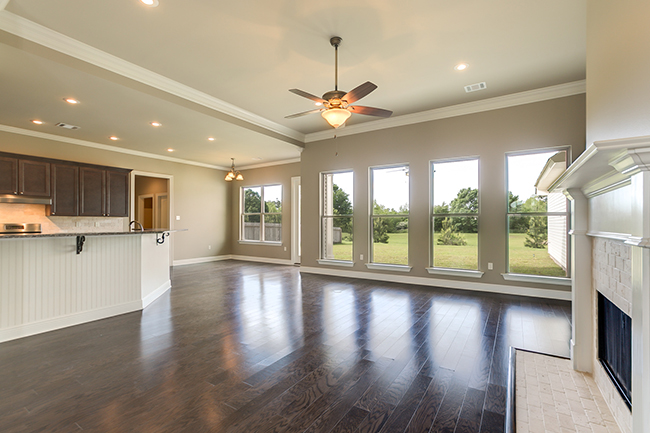
2-Lot 34 Autumn Creek Family RoomAccording to over 80% of Americans surveyed by the National Association of Home Builders (NAHB), homeownership is one of the highest and best investments in not only a financial future but also an emotional and mental future as well.  Home provides security in investment, security in living (the physical walls of the home), security in family (many couples dream of owning a home to rear their children), and security in equity in the future.  Homes are one of the largest financial investments that can be made that will absolutely return money to a homeowner in the form of equity loans that can be taken out of the house.

Most everyone has heard of the “American Dream” and Leonard Boswell, former U.S. Representative, described it best when he said, “The American Dream is one of success, home ownership, college education for one’s children, and have a secure job to provide these and other goals.” The (NAHB) believes this still holds true in today’s current housing market.   According to a polling done in July on over 2,800 registered voters “…..most Americans believe that owning a home remains an integral part of the American Dream and that policymakers need to take active steps to encourage and protect homeownership,” said NAHB Chairman Ed Brady.

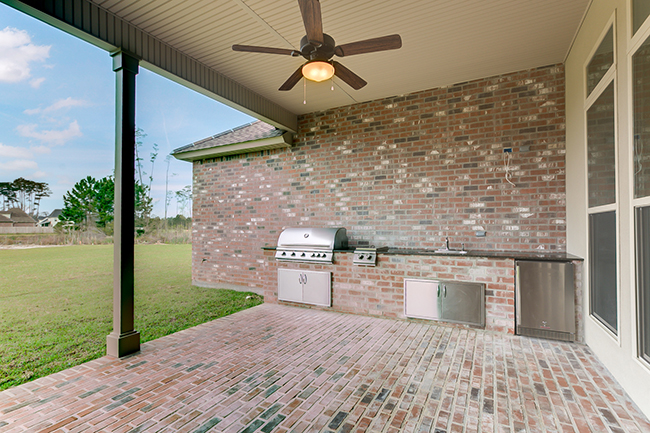
17-Lot 207 Fully Bricked Back PatioThe polling was done to explore the American peoples’ perspective on homeownership, housing production, and government programs that assist in homeownership.  Four out of five Americans still factor homeownership into the “American Dream’” believing it is still a worthy investment.  The key outcomes of the study were as follows: 82% of Americans feel that owning a home is the highest of investments, 81% of 18-29 year old Americans are planning to purchase a new home, 72% agree that the government providing tax incentives help fuel homeownership, 46% feel that now is a good time to purchase a new house and 36% of the Americans surveyed planned to purchase a new home within the next three years.

So with that said, homeownership is still a big part of the “American Dream” and to end with another quote, Maya Angelou describes homeownership as this, “The ache for home lives in all of us, the safe place where we can go as we are and not be questioned.”

Click Here and Here for the Sources of the Information.

Monday, June 13, 2016

National Association of Home Builders Announces Positive Housing Recovery

According to the National Association of Home Builders’ (NAHB) Leading Markets Index (LMI), the national housing market is within a 5% range of complete housing recovery compared to what is considered a “normal” housing market which the United States last saw in 2006.  Out of a score of one, the latest LMI scored a .95 nationwide in housing recovery.

How is the LMI Calculated?

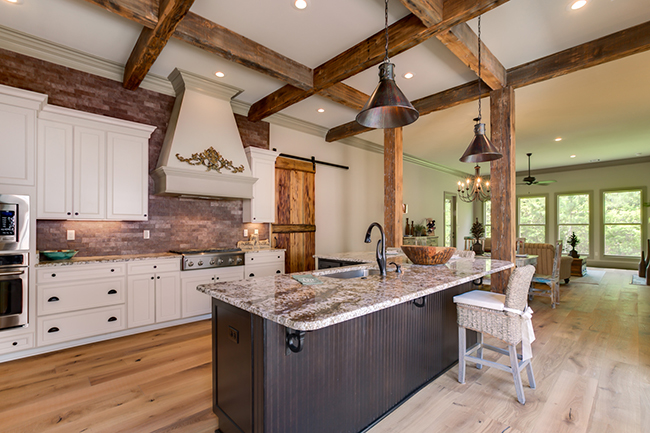
5-Lot 91 Maison du Lac Rustic Kitchen Design with GraniteThe way that the LMI makes a numeric determination is taking statistics of single-family housing permits, employment, and home prices calculated for the entire country and specifically 337 local markets.  Single-family home permits rose from .48 to .49, new home prices increased from 1.38 to 1.40, and employment rose from .96 to .97.  The really good news is that approximately 35% of the 337 markets have a score that exactly equaled 1 or is greater than 1.

The number of markets which increased overall in single-family home permits in a year-over-year comparison rose by almost 65%. Employment numbers increased 71%.  Three hundred twenty-four markets out of the 337 are now showing new home pricing that is considered normal according to the last data recorded in a normal real estate market in 2006.

For communities located in Louisiana, almost all counties accounted for were located in the top 20% of housing rankings.  Approximately 4 areas were in the top 60% – 80% rankings relative to normal housing numbers for new home permits, employment and new home pricing.  Louisiana overall experienced a far softer impact of the slowdown in housing market numbers of the Recession than other states in the United States.  Baton Rouge consistently ranks in the top 10 cities in the United States with the best recovery numbers to date.

Click Here for the Source of the Information.