Showing posts with label private residential construction. Show all posts

Monday, May 16, 2022

March Sees a Rise in Private Residential Construction Spending

 According to the National Association of Home Builders (NAHB) there was a 1% rise in private residential construction spending from February's 0.7%. Total private residential construction spending was 18.4% higher than it was a year ago and spending was at a seasonally adjusted annual rate of $882 billion.


The rise is the result of the strong growth of spending on improvements and single-family. Single-family construction spending was up 1.3% over February estimates with an increase to $472.6 billion. This is great news since the home building industry is still facing supply chain issues and labor shortages.

There was a decrease however in the private nonresidential construction spending to a seasonally annual rate of $497.6 billion which was down 1.2% from February estimates. This still is not bad since it is 8.5% higher than a year ago. The highest increase in this category was in manufacturing at $22.7 billion.

The National Association of Home Builder's construction spending index shows a great rebound back to pre-COVID-19 numbers. The NAHB construction spending index illustrates the solid growth in single-family construction and home improvement from the second half of 2019 to February 2020.

Click Here For the Source of the Information.

Wednesday, November 21, 2018

New Homes Are On The Rise

The housing market is booming and new home construction is benefiting.  NAHB reports that private residential construction spending has increased.  This increase is across the board from single family
to multi-family homes.

Mulit-family accounts for $64.2 billion which attributes to the majority of the increase. Single family was shown to also hold a steady growth with a 0.9 percent increase in the third quarter of 2018.

The Census Construction Spending data details this strong growth which is from 2010 to April 2017. The rise in construction spending comes from the high spending on multi-family. The annual nonresidential spending increase  was based on class of power which totaled $8 billion, office comes next at $7.6 billion and last is lodging totaling $4.2 billion.


Click here and Click here for sources of the information.

Tuesday, September 5, 2017

Increase in Private Residential Construction Spending

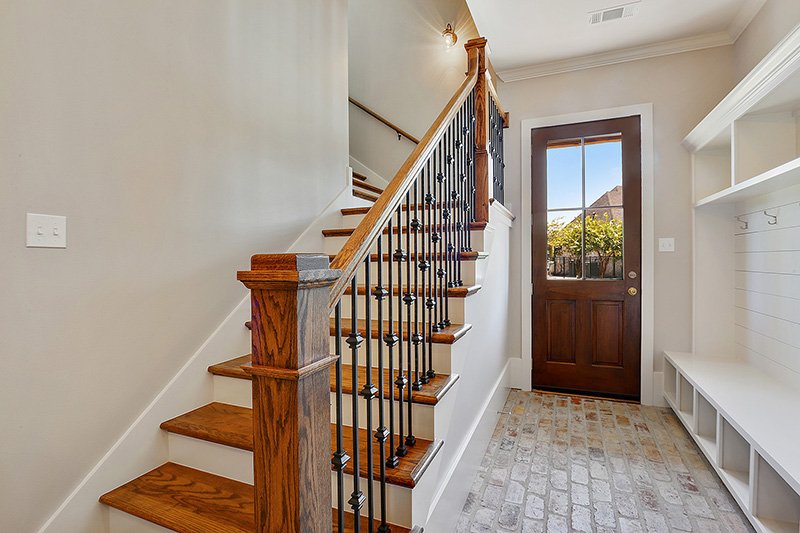
12-196 Bedico Creek Mud RoomPrivate residential construction spending is spending on construction by private parties and homeowners.  Data about this construction spending is collected from retail and wholesale outlets nationally. It seems that homeowners and small builders have a positive outlook on the economy and are spening money on new home construction on their own land or lot, as well as additions and remodeling to existing homes that they own.  Many people buy land and hold it for awhile before they decide to build a new home.  By owning land, there is an opportunity for new home builders to be able to more easily qualify for a construction loan by utilizing the equity in the land.

In addition to new home construction, homeowners are improving their homes as well, by contracting popular remodeling projects, such as kitchen, master bath, and outdoor area remodels.  Additions of pool houses, mother-in-law suites, and over-the-garage apartments are also popular construction projects for existing homeowners, which contribute money to the total amount of private construction spending during the month of July.

The National Association of Home Builders (NAHB) did an analysis of the Census Construction Spending, and the data showed an increase of private residential construction spending of .8% in July over June, 2017, to an amount of $523.1 billion.  This increase was also an 11.6% increase year-over-year compared to 2016, and it was the third consecutive monthly increase for private construction spending after it went down slightly in April, 2017.

The breakdown in construction spending between single-family home construction and home improvement of existing homes shows that new home construction went up by .8% compared to June to reach $264.1 billion, and $192.4 billion was spent on home remodeling or renovation, which was a 1.41% increase month-over-month.  Also remodeling / renovation spending was up a total of 16.5% year-over-year compared to July, 2016.

Click Here for the Source of the Information.

Wednesday, March 30, 2016

Construction Spending Shows a Year-Over-Year Increase

The National Association of Home Builders monitors the construction industry so it can be the first to report both positive and negative news to the real estate industry and if necessary, to Congress.  Since the housing industry is one of the leaders in economic growth and development in the United States, and the national economy depends on real estate for a good portion of the GDP, the health of the real estate industry if of prime importance to those vendors, contractors, and builders who are involved in its day-to-day production.

Building a Raffle House for CharityTo that end, construction spending was reported by the National Association of Home Builders (NAHB) to have grown in November, 2015.  Private residential construction which includes homeowner improvements, DIY remodeling and renovations, and other types of repairs saw an increase in construction spending of 5.9% from November, 2014.  Single-family construction spending was up 9% over the same period and multi-family construction spending was up 12%.
From November, 2015, to December, 2015, private residential construction spending increased by .12%.  Single-family home construction spending increased to $231 billion which is a 1% increase from November.  Multi-family spending increased to $53 billion – a 2.66% increase.  Interestingly, if multi-family spending levels off to a steadier pace, which it is predicted to do in 2016, the trend in real estate suggests that single-family home construction will begin to increase.

In the commercial sector, an increase of 45% in the manufacturing-related construction from December, 2014, to December, 2015, drove an overall increase of 8% year-over-year in commercial construction spending.

Since the Great Recession, the real estate industry has been on a continuous climb of recovery once the housing market started to turn around.  The numbers at the end of 2015 reflect this slow but steady progress for builders, contractors, remodelers, and renovators, as well as all of the construction employees involved in projects nationwide.

Click Here for the Source of the Information.