Showing posts with label homeownership. Show all posts

Tuesday, August 1, 2023

And the Winner Is..... Homeownership

 The current housing market sees high mortgage rates, concerns about another recession and inflationary pressure. Even with these trends, it is a great time to buy a home because the long-term benefits are still worth it.

If you ask a homeowner who has had their home for 5, 10, or more years they will tell you they have no regrets. The main reason is due to the growth in a home’s value over time. According to Fannie Mae, seventy percent of those that were surveyed said that buying a home is a safe investment.

The Federal Housing Finance Agency (FHFA) reveals how much homes have increased in price over the last five years. The highest overall increase was seen in the Mountain region at 68.9%. Next came South Atlantic with a 67.5% increase, then East South Central at 63%, New England came in with 57.5%, East North Central and West South Central at 51.8%, Middle Atlantic came in at 49.4%, West North Central with 48.8% and last is Pacific with 48%.

As far as the percent change in home prices was drastic. The highest was in the Mountain region at 457.5% and the lowest was in East North Central at 214.2%. The Pacific region had a 334.1% increase, South Atlantic by 320.4%, 302.4% in West South Central, West North Central 270.1%, and Middle Atlantic with 239.9%.

Talk to a Realtor who will help you with the options of purchasing a new home. They can also let you know the great long-term benefits of owning a home.

Click Here For the Source of the Information.

Wednesday, November 3, 2021

Several Questions To Ponder Before Buying a Home

Purchasing a home is one of life's biggest and most stressful events. With that said, it is also one of the most exciting events. When it comes to advise, everyone has it and while friends and family have your best interest in mind, to make the best decision, you need to ask yourself these three questions.

1. What's Going on with Home Prices?

Home prices are a big part of the housing market. Home prices directly affect how much it will cost you to buy a home and how much you stand to gain as a homeowner when prices appreciate. Waiting might not be in the best interest of the buyer.

The current market is seeing big home price surges and looks like they will continue. Keeping Current Matters reveals Home Price Forecasts for 2021. This is a good tool to use to predict just what it will cost you to buy a home. Today the average of all forecasts is 12.46%. This means a median-priced home that cost $350,000 in January of 2021 will cost an additional $43,610 by the end of the year. So in a nutshell the longer you wait to purchase a home the more it will cost you.

2. Are Today's Low Mortgage Rates Going To Last?

Due to record-low mortgage rates, today's market is booming. Interest rates also put a big dent in the market. The lower the rate the better the market, the higher the rate the slower the market. Just a slight increase can make a big impact on the overall cost of a home.

3. Why Is Homeownership Important to You?

The answer to this question is not the same for everyone. This is a personal decision and can only be answered by you. Financial benefits are important but emotional benefits are also. According to the 2021 National Homeownership Market Survey, there are nine reasons homeowners value homeownership.

These nine reasons directly affect how you feel about your home. Six of the nine reasons include stability, safety, a sense of accomplishment, a life milestone, a stake in the community, and personal pride. The National Housing & Financial Capability Survey from NeighborWorks America reports that Americans believe owning a home provides a sense of safety and security and an increase in financial stability.

Remember owning a home is a life-changing event and will have a big impact. This is a big decision and all options should be well thought out. Using a trusted Realtor can help you with the decision.

Click Here For the Information.

Wednesday, May 26, 2021

THERE ARE TONS OF FINANCIAL BENEFITS IN HOMEOWNERSHIP


According to a survey done by
 Fannie Mae, homeownership is highly rated by consumers. In fact, they continue to see homes as a safe, high potential investment.  The Fannie Mae Q4 2020 National Housing Survey reported that consumers believe it is just as safe to invest in a home as savings and money market accounts.

The survey found that consumers relayed that the top four financial benefits of homeownership were a better chance of saving for retirement, the best investment plan, the chance to be better off financially and the chance to build up wealth. Of these four benefits, 88% of consumers felt it gave a better chance of saving for retirement, 87% felt it was the best investment plan, 85% felt it gave them a chance to be better off financially and 85% believe homeownership presented them a chance to build up wealth.

Consumers’ opinions are right on the money so to speak. The Federal Reserve’s Survey of Consumer Finances revealed that owning a home is a “clear financial benefit.” In the survey, it was reported that those who owned a home vs renting had a forty times higher net worth. As the housing market grows stronger, the gap between renters’ and homeowners’ net worth grows farther apart. Corelogic reported that the equity in homeownership grew by $26,300 over the last year which widened this gap even further.

Keeping Current Matters released data showing the gap in the net worth in every income category between homeowners and renters. For a homeowner making under $26,000 their net worth is $103,000 but a renter’s net worth is only reported at 1,000, homeowner’s making $26,000 – $46,000 their net worth is $140,000 and a renter making the same income net worth is $6,000, homeowners making $46,000 – $74,000 have a net worth of $190,000 while renters only have $11,000, homeowners making $74,000 – $127,000 have a net worth of $261,000 and renters only $34,000, homeowners making $127,000 – $192,000 have a net worth of $433,000 while renters making the same income have a net worth of $117,000 and homeowners making over $192,000 have a net worth of $1.66M while renters only $705,000.

Homeownership is a solid financial investment opportunity but should you choose to purchase a home, the best thing to do is use a local real estate professional. A Realtor can help you take the next steps towards homeownership.

Click Here For the Source of the Information.

Friday, February 28, 2020

How Often People Move Can Impact the Housing Market

Just like any other consumer product the more something is in demand the better the market for it. The housing industry is no exception to the rule. Everyone needs a place to live so this, in turn, affects every aspect of the housing market from real estate to lending to title. The data collected
regarding if and when people are moving can interpret if the housing market is thriving.

There are a variety of sources and people interpreting the data collected. This can hinder a potential home buyer’s research when it comes to the housing market. There are many “spin doctors” who want to influence the public and might be steering them in the wrong direction. When it comes to research, there are many ways to discern what is fact and what is fiction.

Go to the facts, remember for the most part numbers don’t lie. The Census Bureau is a great neutral source. The Census Bureau is supervised by the Economics and Statistics Administration within the Department of Commerce.

The history behind the Census Bureau is interesting within itself. Founded in 1790 when Secretary of
State Thomas Jefferson appointed U.S. marshals throughout the country to collect data on the 3.9 million residents. For the next 150 years, the six question census added many categories that included manufacturing, agricultural, mining, fisheries, native language and others. In 1940, data on housing was added (other than the names of those living in households) and the real estate industry began using the data to predict the health of the housing market.

The homeownership rate is an important statistic to focus on as a baseline to research. An interesting fact according to the census, is that the homeownership rate has held steadily for approximately 60 years. According to housingwire.com, the ” rate is calculated on the proportion of households that are owner-occupied and has continuously held strong in the 60-70% range throughout the years.”

Throughout the years the highest at 70% was in 2005 and the lowest at 62% was during the recession.
Statistics in migration patterns show that 43% of people move due to housing-related issues, 27% move because of family-related issues, 18.5% move because of employment issues and 10.6% move for other various reasons. The Southern Region of the country has seen the largest migration pattern.

Click Here For the Source of the Information.

Wednesday, July 24, 2019

House-Passed Bill Gives First-Time Home Buyers a Break

We all know that buying a home is a big step for anyone especially for someone who is doing it for the first time. A bipartisan House bill passed at the beginning of July 2019 that will help ease the first time buyer’s anxiety over the home buying process. The bill will allow first-time home buyers to pay less closing cost if they go through homeownership counseling.

“The idea behind the legislation is that counseling should improve loan performance and make people better borrowers,” said Pete Mills, senior vice president of residential policy for the Mortgage Bankers Association, which generally supports the bill.

The Housing Financial Literacy Act applies to mortgages backed by the Federal Housing Administration and is a tool that can be used for first-time home buyers. Those eligible, will go
through counseling which teaches them ways to be financially responsible homeowners. Once completed, they would receive a discount on the upfront mortgage insurance that is required on FHA loans.

First-time home buyers tend to go with FHA loans because of the less-stringent requirements. Although the requirements are more lax than a conventional loan it requires more money for insurance premiums because the FHA loan is riskier. Today the delinquency rate on FHA loans is around 9% where the delinquency rate on a conventional loan is only around 3%.

The risk for the lenders on an FHA tends to be higher because a good many of the first-time home buyers using an FHA have low or moderate incomes with lower credit scores. Lenders require those using the FHA to pay mortgage insurance along with an upfront mortgage insurance premium. Currently the upfront amount paid is 1.75% of the base loan amount. If a borrower does not have the money upfront to pay the premium, the cost can be rolled into the loan. The Housing Financial Literacy Act allows a discount of 25 basis points making the premium amount 1.5% of the base loan amount instead of the 1.75%. As an example, the upfront mortgage premium on a $200,000 loan would be $3,500 but with the discount the first-time buyer would only need to pay $3,000.


Hopefully if put into law, the bill will not only help reduce cost, but also give first-time home buyers the tools to become financially responsible homeowners.

Click Here For the Source of the Information.

Tuesday, July 16, 2019

Too Little or Too Much….

When purchasing a home, the majority of homebuyers will purchase using a mortgage. Your credit and your down payment will affect your monthly payment and mortgage rate. The more you put down the lower your monthly payment will be making it easier to build more equity in a shorter amount of time. Although this is a plus, it can back-fire when a homeowner puts down most of their savings on a down payment leaving no funds for home maintenance or emergencies.

“There’s really no one-size-fits-all solution,” says Jason Speciner, a certified financial planner in Fort Collins, Colorado.

Find a happy balance. Figure out how much you can put down to lower payments without leaving the finances high and dry for those upgrades, maintenance issues, life emergencies or life in general. Here are a few pointers to follow when deciding the amount to put down on a home.

Do the benefits outweigh the negatives? Future homeowners are surprised at the differences in the monthly mortgage payments when calculating different down payment amounts. If a higher down
payment would mean a borrower could avoid mortgage insurance this would definitely be a plus. Mortgage insurance is a monthly expense added on top of the monthly mortgage payment making it a much slower process of building equity. There are times when a higher down payment does not reap any benefits. If it leaves a future homeowner strapped for cash it is just not worth it. If someone just needs to put down 3% for a conventional loan but tries to scrape together 5% to lower the monthly payment it just doesn’t make enough difference and cannot be justified if it leaves a future homeowner strapped.

Always be mindful of the effects a higher down payment will have on your financial plan. According to the Bank of the West’s 2018 Millennial Study, 29% of homeowners between the ages of 21 to 34 borrowed from their retirement accounts to make a large down payment on a home. Taking from Peter to pay Paul is not always the greatest solution. Taking money from your 401(k) is definitely risky. If you loose your job, the money must be put back into the 401(k) before the next yearly tax filing or it will be treated as ordinary income with a 10% penalty. An Roth IRA is not as risky, but when taking out money from your IRA you are losing tax-free growth.

Always expect the unexpected. You always want a cushion to fall back on. Leave some cash in the bank for emergencies. Sadly NerdWallet’s 2019 Home Buyer Report, says that 34% of recent first-time home buyers feel they are no longer financially secure after purchasing their home. Homownership includes many expenses that first time homebuyers might not have planned for. Do not drain your savings on a down payment and closing costs.

Speciner says it best, “Emergency reserves are for ‘Oh, shoot’ moments.”


Click Here For the Source of the Information.
Friday, March 15, 2019

Homeownership is The Way To Go

Rent is rising fast and many are turning back to owning vs. renting. According to the Unites States Census Bureau, in 2016 the decline in homeownership suddenly changed and started to rise. The Housing Vacancies and Homeownership survey reflects that homeownership rates rose from 63% in 2016 to 64.6% in 2018. Here are some of the reasons why this reversal has come to fruition.

Millennials had enough with living with mom and dad. In 2017, 22% of adults between the ages of 25 to 34 were living with their parents compared to the 11.6 % of adults between the ages of 25 to 34 that were living with their parents in 2005. This increase was due to the housing crisis, slow earnings
growth, soft labor market and steep student loan debts. As of 2016, Millennials started to be in the position to financially own a home. The homeownership rate for those under 45 began to recover very quickly. This is an important statistic for the housing market because Millennials (those born after 1981) will outnumber baby boomers in the near future.

“Millennials have been on a buying spree the last few years,” Zillow Research economist Aaron Terrazas said.

The groundwork for the turning point hit in 2015 when rental rates rose nationally more than 6% from the previous year. This marked one of the rare times that rent rose faster than home prices.

“Rent appreciation was so high during that period that it essentially put fire under people’s feet to get up and buy,” Terrazas said. “People who may have been sitting on the fence would be incentivized to jump into homeownership,” according to Terrazas.

Rising house prices also led to a quick reaction as Milleanials feared they would be priced out of the market. Terrazas commented that, “driven to homeownership by fears that with homes appreciating so quickly that they would be locked out of buying a home in their desired area.”
Another fear was that interest rates could go up so those who wanted to own a home needed to lock in immediately.

“Maybe people thought ‘interest rates could go up, I should lock in now,’ ” Urban institute housing expert Laurie Goodman said.

Those that were affected by foreclosures during the 2008 recession are ready to buy again. Those that went into foreclosure are now able to obtain a mortgage( it takes seven years for your credit to be cleared of a foreclosure). Buyers who were burned during the housing bubble are no longer gun shy, they are beginning to reenter the housing market.

Overall the unemployment rate is in better shape than it was a decade ago and there are more people out there ready to invest their money.

“When there’s very low unemployment, when there’s been slow but steady wage growth, that tends to make households confident in their ability to make what will probably be their largest investment of their life,” said Ralph McLaughlin an economist at CoreLogic.


Click here for source information.

Thursday, September 15, 2016

NAHB Works with Congress to Help Low-Income Housing Laws


Architectural details of modern apartment building.


Without the help of the country’s federal government, many Americans could not see homeownership in their future.  The National Association of Home Builders worked with the House of Representatives and the Senate to pass a bill in Congress that would facilitate the chance for low-income Americans to become homeowners.  On July 29, 2016, the President signed The Housing Opportunity Through Modernization Act which consists of several reforms which will increase access to affordable rental housing, provide assistance to low-income renters and facilitate homeownership.

There are many facets to the bill which is now a new law.  In the past voucher holders had no chance in competing with market-rate renters.  Because of red tape in the inspection process, voucher holders were not able to move into a multi-family unit such as an apartment or condominium immediately.  Now with the new law inspection requirements in the Housing Choice Voucher Program are more efficient and allow a quicker approval.

The contract terms of HUD’s Section 8 Project Based Housing Choice Voucher program is now 20 years instead of 15 which enables project-based vouchers to be used with the Low Income Housing Tax Credit residences.  Voucher holders will now be protected from economic influences that are out of their control, which means that when the market rental rate goes up, voucher holders will not have to be displaced because their payments are not high enough.  This also allows property owners to preserve respectable renters.

The Rural Housing Service Single-Family Guaranteed Loan Program will also be updated to compete with other government loan programs.  This will allow more low-income renters to actually be able to get a home loan.

FHA regulations that are enforced on existing condominium projects have been reduced.  This means that the purchase of a condo will be less stringent in terms of required owner occupancy for the buyer.  Buyers will now find it easier to purchase multi-family units for rental purposes, creating more rentals in the market.  Also, condo owners who are able to sell will then be able to move up to a single family detached home, if they would like.

Click Here for the Source of the Information.

Monday, September 5, 2016

NAHB States Homeownership Is One of the Highest Investments

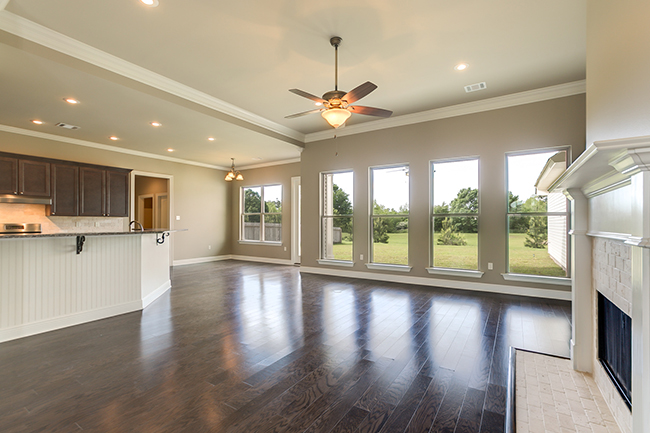
2-Lot 34 Autumn Creek Family RoomAccording to over 80% of Americans surveyed by the National Association of Home Builders (NAHB), homeownership is one of the highest and best investments in not only a financial future but also an emotional and mental future as well.  Home provides security in investment, security in living (the physical walls of the home), security in family (many couples dream of owning a home to rear their children), and security in equity in the future.  Homes are one of the largest financial investments that can be made that will absolutely return money to a homeowner in the form of equity loans that can be taken out of the house.

Most everyone has heard of the “American Dream” and Leonard Boswell, former U.S. Representative, described it best when he said, “The American Dream is one of success, home ownership, college education for one’s children, and have a secure job to provide these and other goals.” The (NAHB) believes this still holds true in today’s current housing market.   According to a polling done in July on over 2,800 registered voters “…..most Americans believe that owning a home remains an integral part of the American Dream and that policymakers need to take active steps to encourage and protect homeownership,” said NAHB Chairman Ed Brady.

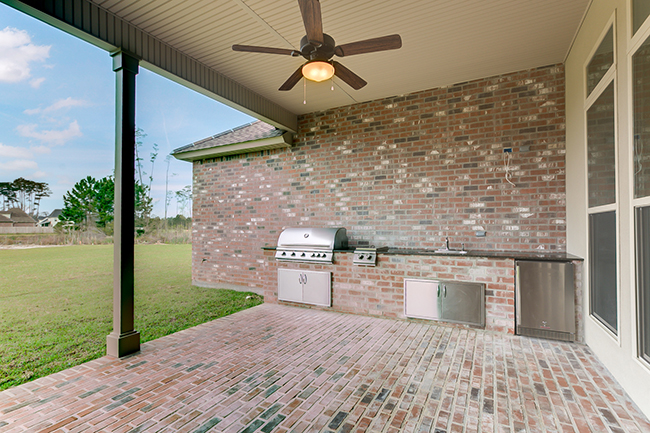
17-Lot 207 Fully Bricked Back PatioThe polling was done to explore the American peoples’ perspective on homeownership, housing production, and government programs that assist in homeownership.  Four out of five Americans still factor homeownership into the “American Dream’” believing it is still a worthy investment.  The key outcomes of the study were as follows: 82% of Americans feel that owning a home is the highest of investments, 81% of 18-29 year old Americans are planning to purchase a new home, 72% agree that the government providing tax incentives help fuel homeownership, 46% feel that now is a good time to purchase a new house and 36% of the Americans surveyed planned to purchase a new home within the next three years.

So with that said, homeownership is still a big part of the “American Dream” and to end with another quote, Maya Angelou describes homeownership as this, “The ache for home lives in all of us, the safe place where we can go as we are and not be questioned.”

Click Here and Here for the Sources of the Information.