Showing posts with label home sales. Show all posts

Monday, July 5, 2021

Checklist For Getting Your Home Summer Ready

Summer is a fun time where most of us can enjoy the outdoors. When it comes to your home, you want to keep the hot summer days out. There are several things you can do to help keep cooling costs down and prevent hot-weather mishaps. Getting your home ready for the hot, humid summer days is a task every homeowner should do. According to the Good Housekeeping Institute and Trane Residential, there is a must-do summer checklist.


“Between the soaring temperatures and uptick in extreme weather, your home might have to work a lot harder this summer,” says Rachel Rothman, the institute’s chief technologist. “Plus, you want to make sure all major systems are in order before heading off on any long holidays.”

Take Care of Cooling Equipment

Many homeowners forget these important tasks, in order for your central system to work efficiently a homeowner should change the HVAC filter every 90 days. A dirty filter can send dust and dander back into your home. Worst of all a dirty filter can add stress to your HVAC system.

Your central AC system should be serviced at least once a year, preferably every season. A professional will run a range of maintenance duties that a homeowner is not able to do. Annual tune-ups will extend the life of your equipment by several years or more. A typical service will run between $100 to $300 per service.

Check the Temperature

Having a thermostat that will adjust the indoor temperature throughout the day can save tons on your utility bill. In fact, Wi-Fi-connected devices can lower cooling costs by as much as ten percent according to the U.S. Department of Energy.

Keep Humidity and Air Pollutants in Check

Bugs and other pests love humidity. Moist air creates a perfect environment for dust mites, mold, and other allergens in your home. According to the U.S. Environmental Protection Agency, a homeowner should keep humidity levels below 60%. The study concludes that ideally, a home should have a humidity level between 30 and 50 percent.

A stand-alone dehumidifier is a perfect tool to lower moisture levels in a small space such as a basement. If you live in a drier climate, then a humidifier can help put moisture back into your home's air.

Be Prepared for Extreme Weather

Summer means unpredictable weather and is a high time for storms in many areas. Storms mean power outages and for this, a homeowner should look into getting a backup generator. Storms can also wreak havoc on your gutter system so make sure they are in good working order. Clean them out and make sure the water drains properly away from your home.

FEMA suggests every homeowner have an emergency kit with 72 hours worth of supplies. Each kit should include (3 gallons per person), non-perishable food, a battery-powered or hand crank radio, a flashlight with extra batteries, a first-aid kit, dust masks, a whistle to signal for help, and a wrench or pliers to turn off utilities.

Be on the Lookout for Pests

Summer is the season for ticks, termites and carpenter ants. These insects love moist soil and rotting wood so make sure your gutter system is cleaned out and working properly. Keep things like mulch, firewood and dense shrubbery away from the foundation.

A good way to determine if you have any pests is to look for piles of sawdust along baseboards—a telltale sign of carpenter ants. Termites, meanwhile, like to shed their wings along windowsills, walls, and other entry points.

Make your home and its surroundings a negative space for insects such as mosquitoes and ticks. Remove all standing water from birdbaths, gardening pots or any other container around the outside of your home. Keep your grass mowed. Ticks love tall grass in shady parts of the yard.

Being a homeowner is a lot of work but well worth it. If you are in the market for a new home, contact your local Realtor.

Click Here For the Source of the Information.

Thursday, November 19, 2020

High Demand in Housing Is Having a Direct Effect on the Market

 The pandemic has changed the way people view their homes. From the stay-at-home orders to the scare of spreading the virus, the home is everyone’s safe haven. Luckily today’s technology has enabled many Americans to work from home. More and more people are reassessing what they want in a home such as a home office, flex space and outdoor living space.

The housing market is booming in fact, home sales are higher than they were before the pandemic. The


existing and new home sales are the highest level we have seen in over a decade. With the increase in home sales, comes an increase in the demand for building materials and labor.

Lumber has been in very high demand during recent months. Not only are builders building new homes but many homeowners are remodeling their current homes. Home offices and remote work locations have also spiked the demand for this hot commodity. The November 2020 Random Length Lumber contract shows a low set during the height of COVID in April at 277 but then in August lumber was set at 820.

The copper market has also been greatly affected by the booming housing market. Looking at the September 2020 copper futures contract, we witness a low set on March 19 at 1.99, followed by a big move up to 3.08 by September 15. Copper is also valuable to the technology industry where it is used for building servers, semiconductors and switches.

Currently, sales of single-family homes are up 24% from the spring, existing condominiums and co-ops are up 32%. Lumber and copper numbers are a great way to measure and predict the direction the housing industry will go, knowing which markets are directly affected by the growing demand for single-family units can be important for every trader and investor.

Click Here For the Source of the Information.

Wednesday, September 30, 2020

Today’s Selling Power Is Strong For Homeowners

 If you are a homeowner and are thinking about selling your home, now is the time. Homeowner equity is increasing because the average time a


homeowner stays in their home is longer than in the past. According to the 2019 Profile of Home Buyers and Sellers, the median tenure for sellers was 10 years in 2019. After the recession in 2008, the median tenure in a home started to increase yearly. Now is the time to change the trend and sell with buyer demand high and inventory low.

Over the past 10 years, the equity position of homeowners has positively changed as a result of more than eight years of rising home prices. As the economy climbed out of the recession in the first quarter of 2010, 25.9% or 12.1 million homes were still underwater, compared to the first quarter of 2020 when the negative equity share was at 3.4%, or 1.8 million properties. Borrowers have seen an aggregate increase of $6.2 trillion in home equity since the first quarter of 2010 and the average homeowner has gained about $106,100 in equity,” explains CoreLogic.

To sum it up, the longer a homeowner stays in their home, the home price rises and more equity is gained. This is a form of forced savings that can go towards the purchase of a new home. This increased equity will increase the homeowner’s profit on the sale of their home.

According to the Q2 2020 U.S. Home Sales Report from ATTOM Data Solutions, the second quarter of 2020 saw a gain of $75,971 on a typical sale of a home. This was a huge difference from just the year before in the second quarter which saw $65,250 in a typical sale.

If you are considering selling your home, now is the time to make that move. It is important to determine how much equity you have in your home if you decide to sell. A local Realtor can help you determine your equity, selling your home and purchasing a new home.

Click Here For the Source of the Information.

Saturday, April 25, 2020

Home Buying Still Supports the Current Local Economy

The country is still trying to get comfortable with the new norm. Life all around is ever-changing with the current pandemic. The real estate market is no different – agents, lenders and customers are connecting and transacting virtually. One thing that has remand constant in this uncertain day in age is purchasing a home.

The National Association of Realtors‘ current report stresses the full economic impact of home sales, “The total economic impact of real estate related industries on the state economy, as well as the expenditures that result from a single home sale, including aspects like home construction costs, real
estate brokerage, mortgage lending and title insurance.”

To see how this works, we will breakdown the average economic impact of just one home sale in the United States. A home that sold for $84,724 will give the real estate industries $23,544 (27.8%), home purchase expenses $4,243 (5%), multiplier of house related expenditures $25,932 (15.1%) and new home construction $91,433 (53.3%).

As you can see when a home is purchased it makes a big impact on the economy. It is a win-win situation where you have a place to live, and you are initiating jobs and income for everyone involved in the transaction. In a nutshell, purchasing a home is making the home buyer an “economic driver.”

Even with the current times, there are many things you can do to keep your home search going. If you have decided to go ahead with your dream of owning a home you need to get pre-approved for a mortgage. Getting pre-approved not only helps you understand how much you can afford but also lets others know you are a serious buyer. Since there is a stay-at-home order, it is important to connect virtually with a Realtor or talk directly to a builder to build a new home or fully custom home. A Realtor is someone you can trust and knows the ever-changing dynamics in the current market. Builders have tons of resources including floorplan design, financing, pricing and selections recommendations, and all businesses involved in the closing of your new home.

Also, you can still do real estate research online.  Even before the pandemic, online searches for real estate were well over 90% with home buyers starting on the Internet to find a home to buy. Shop mortgage lenders and see if there are any down payment assistance programs that would work for you.

You do not have to put your dream of owning your own home on hold, you can view do most of the preliminary footwork for finding and making an offer on a home for sale online. Virtual tours and online sites can help you navigate the housing market, and Ron Lee Homes is also here to help with a toolbox of virtual services for your home buying or home building needs.  Contact Us Today at 985-626-7619 or email Info@RonLeeHomes.com.

Click Here For the Source of the Information.

Tuesday, January 28, 2020

The New Year Starts Off With Mortgage Rates Below Last Year’s Average

A new year has brought good news for the housing industry. The first week reported that the average U.S. fixed rate for a 30-year fixed mortgage averaged at a low 3.72%. The findings were 80 basis points below data reported a week earlier.

George Ratiu, Realtor.com’s chief economist said, “The conventional 30-year loan slid 2 basis points to 3.72% in the first week of 2020. Rates remain about 80 basis points lower than the first week of
2019.”

Ratiu predicts that employment and wage gains will fuel the housing industry. The economy will maintain a moderate growth trajectory this year.

The 15-year FRM also was at a low 3.16% which was down from this time last year’s reportings of 3.99%. The average rate dropped in just one week from 3.19% to 3.16%. The 5-year Treasury-indexed hybrid adjustable-rate mortgage also averaged 3.46% which was lower than the 3.98% reported this time last year.

“As mortgage rates remain favorable, buyers are likely to get a head start on the spring shopping season in the first couple of months of this year,” Ratiu said. “A stronger infusion of new homes in affordable price ranges would be a welcome gift for the New Year.”

Sam Khater, Freddie Mac’s chief economist, believes the rates have maintained around 3.7% for the last couple of months because of ” the combination of improved economic data and market sentiment has led to stability in mortgage rates.”

“The low mortgage rate environment combined with the red-hot labor market is setting the stage for a continued rise in home sales and home prices,” said Sam Khater.

Click Here For the Source of the Information.

Friday, December 6, 2019

Home Sales Higher Than This Time Last Year

The National Association of Realtors reported good news for home sales this fall. According to their data, home sales were 4.4% higher annually. This stems from the boost in newly built home sales,
lower 30-year fixed rates and an overall increase annually in pending home sales.

Across the country for-sale inventory has fallen but the demand has increased. October 2019, showed a major spike in sales of newly built homes compared to those reported in October 2018. Builders across the United States are focusing more on construction of more affordable homes.

Lower rates throughout this year has definitely pushed an increase in demand for new construction. The average 30-year fixed mortgage rates reached almost a full percentage
point lower this October than it was a year ago. Reports are showing an increase in mortgage applications and this will continue as the lower interest rate holds.

All the regions reported an annually higher percentage in pending home sales. The Northeast reported a 3% higher increase, the Midwest was 1.8% higher, the South reported a 5.1% increase from this time last year and the West was a 7.5% increase.

“There is no shortage of buyers seeking homes,” said Lawrence Yun, chief economist at the NAR.

Click Here For the Source of the Information.


Tuesday, October 29, 2019

September was a Positive Month For New Home Sales

This September was reported to be 15.5% higher year-over-year due to the lower mortgage rates. The National Association of Home Builders’ data shows that sales were 7.2% higher in the first nine months of 2019 than those reported in the first nine months of 2018. This first nine months this year
brought in 527,000 sales beating the 491,000 sales reported for the same time frame in 2018.

Signs show sales volume increasing with the more new homes that are reported being built. New home sales for the first nine months of 2019 were up 12.8% in the South, and 7.3% in the West compared to the first nine months of last year.

This fall is a great time to purchase a new home with the median new home sales price at $299,400. Right now, nearly 15% of newly built homes are priced under $200,000! This buyers' market will not last, so if you are in the market to purchase a home, buy your new home before the new year.

Click Here For the Source of the Information.

Tuesday, August 27, 2019

Lower Mortgage Rates Encourages Gains In Existing Home Sales

New home sales are on the rise but the existing home sales are keeping up. According to the National Association of Realtors (NAR) total existing home sales reported a seasonally adjusted annual rate of 5.42 million.

The NAR reported that on a year-over-year basis, existing home sales were 0.6% up than a year ago which included single-family homes, townhomes, condominiums and co-ops. This is the first year-over-year gain in almost a year and a half.

Homes stayed on the market 29 days in July 2019 with 51% of homes on the market selling in less than a month. All-cash sales composed 19% of transactions up from June 2019. Median sale price of
existing homes in July was up 4.3% from a year ago at $280,000 and existing condominium/co-op prices were up 2.5% with a median price of $254,300.

Sales by regions saw an increase, except for the Northeast and West, for existing homes sales in July 2019. Existing home sales in the Midwest grew 0.8% and in the South existing homes rose to 2.7%.
NAR has encouraged the market to add more inventory which is a good sign. The falling mortgage rates, July 2019 at 3.77%, and lower home prices are a big plus.

“We are optimistic that the latter part of this year and the early months of 2020, at least, will see a significant upturn in sales. That, in turn, will boost construction activity in due course,” wrote Ian Shepherdson, founder and chief economist of Pantheon Macroeconomics, in a research note.


Click Here For the Source of the Information.

Wednesday, August 21, 2019

National Mortgage Rates Are at a Near 3-Year Low

According to Sam Khater, Freddie Mac’s chief economist, the lower mortgage rates are getting positive results from home buyers across the nation. Mortgage applications for home purchases are rising steadily and have seen the highest year-over-year change since the fall of 2017.

Here is a look at the national averages with mortgage rates Freddie Mac reported for the week ending July 25, 2019:

The 30-year fixed rate mortgages averaged 3.75% with an average 0.5 point. This was a dip from the week prior which was at an average of 3.81%. July of 2018 reported 30-year rates averaged 4.54%.
The 15-year fixed mortgages reported as the following. They averaged 3.18%, with an average 0.5 point. Again, this was a lower than last week’s which reported 3.23% average. This time last year the 15-year rates averaged 4.02%.

The average 5-year hybrid adjustable-rate mortgages was 3.47%, with an average 0.4 point. Another fall from last week’s 3.48% average. A year ago the 5-year hybrid adjustable-rate mortgages (ARMs) averaged 3.87%

“While the improvement has yet to impact home sales, there’s a clear firming of purchase demand that should translate into higher home sales in the second half of this year,” Khater says.


Click Here For the Source of the Information.

Thursday, March 21, 2019

Spring Uptick For Housing Market

Spring always brings warm weather, sunshine and an upbeat attitude. The home market started off slow for the beginning of 2019, but analyst believe there will be a rise in home sales Spring 2019.

The beginning of the year wasn’t what the National Association of Realtors hoped for. Pending home sales did jump 4.6% this January, however sales were 2.3% lower than a year ago. January marked the 13th straight month of year-over-year declines.

The pending home-sales index (the NAR’s tracking system that records home contract signings) did go up in January to 103.2.  Analysts believe the reopening of the partial government shutdown caused
the boost from the nearly five-year low it saw in December of 2018. In the Northeast pending sales increased 1.6%, in the Midwest 2.8%, only 0.3% in the West and 8.9% in the South. The market should see the home sales from these pending contracts right around Springtime. Contracts usually stay pending on average for about 45 days until they close.

“February existing home sales should now rebound handily and with new home sales likely to head higher too, given the rising trend in mortgage demand, the gloomy housing narrative in markets and the media is set to change quite dramatically over the next few months. The market is not rolling over, and it is not a harbinger of recession in the broader economy,” said Ian Shepherdson, chief economist for Pantheon Macro.


Click here for source information.

Friday, March 15, 2019

Homeownership is The Way To Go

Rent is rising fast and many are turning back to owning vs. renting. According to the Unites States Census Bureau, in 2016 the decline in homeownership suddenly changed and started to rise. The Housing Vacancies and Homeownership survey reflects that homeownership rates rose from 63% in 2016 to 64.6% in 2018. Here are some of the reasons why this reversal has come to fruition.

Millennials had enough with living with mom and dad. In 2017, 22% of adults between the ages of 25 to 34 were living with their parents compared to the 11.6 % of adults between the ages of 25 to 34 that were living with their parents in 2005. This increase was due to the housing crisis, slow earnings
growth, soft labor market and steep student loan debts. As of 2016, Millennials started to be in the position to financially own a home. The homeownership rate for those under 45 began to recover very quickly. This is an important statistic for the housing market because Millennials (those born after 1981) will outnumber baby boomers in the near future.

“Millennials have been on a buying spree the last few years,” Zillow Research economist Aaron Terrazas said.

The groundwork for the turning point hit in 2015 when rental rates rose nationally more than 6% from the previous year. This marked one of the rare times that rent rose faster than home prices.

“Rent appreciation was so high during that period that it essentially put fire under people’s feet to get up and buy,” Terrazas said. “People who may have been sitting on the fence would be incentivized to jump into homeownership,” according to Terrazas.

Rising house prices also led to a quick reaction as Milleanials feared they would be priced out of the market. Terrazas commented that, “driven to homeownership by fears that with homes appreciating so quickly that they would be locked out of buying a home in their desired area.”
Another fear was that interest rates could go up so those who wanted to own a home needed to lock in immediately.

“Maybe people thought ‘interest rates could go up, I should lock in now,’ ” Urban institute housing expert Laurie Goodman said.

Those that were affected by foreclosures during the 2008 recession are ready to buy again. Those that went into foreclosure are now able to obtain a mortgage( it takes seven years for your credit to be cleared of a foreclosure). Buyers who were burned during the housing bubble are no longer gun shy, they are beginning to reenter the housing market.

Overall the unemployment rate is in better shape than it was a decade ago and there are more people out there ready to invest their money.

“When there’s very low unemployment, when there’s been slow but steady wage growth, that tends to make households confident in their ability to make what will probably be their largest investment of their life,” said Ralph McLaughlin an economist at CoreLogic.


Click here for source information.

Thursday, September 29, 2016

Supply & Demand Drives Home Pricing

One of the key factors to success in any kind of business is supply and demand. The National Association of Realtors (NAR) agrees that this principle has boosted home pricing in the current housing market. NAR’s chief economist Lawrence Yun believes the housing market is still going strong because of the lack of inventory even though data shows a modest growth rate reduction.
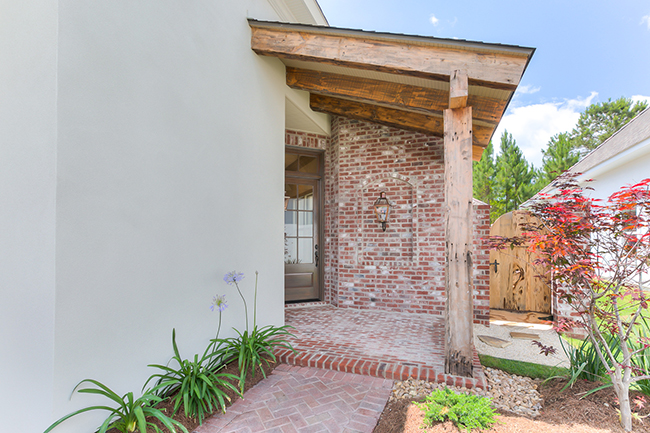
2-Lot 91 Maison du Lac Unique Private EntrywayYun states,”…with homebuilding activity still failing to keep up with demand and not enough current homeowners putting their home up for sale, prices continued their strong ascent – and in many markets at a rate well above income growth.”
In the second quarter of last year the peak existing single-family home price was $229,400, this year however, the second quarter single-family home price has risen 4.9% with a median single-family home price of $240,700.

According to NAR findings, new construction cannot keep up with the demand for new homes.  In the second quarter this year 40% of the listings sold over their listing price. “Many listings in a majority of markets – and especially those in lower price ranges — had multiple offers and went under contract quickly because of severely inadequate supply,” Yun added.

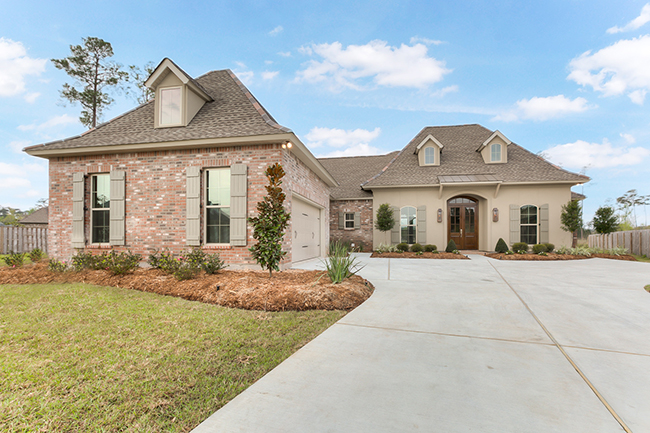
1-Lot 207 Front ExteriorThis coupled with low mortgage rates have many potential home buyers wanting to purchase a new home now.  In the Northeast region there was a 7.6% increase in existing homes sales and the median home price increased to $273,600. The Midwest, though not as high of an increase, was 10.4% in total existing-home sales with a median price of $191,300. The West came in next with a 1.4% increase in total existing-home sales with a median home price of $345,500.  The South came in last with a 0.3% increase with a median home price of $214,900.

Whether you are in the market to sell a home or purchase a home, now is the right time.  The housing market is holding strong and is a great investment for your money.  Locally in St. Tammany Parish, Ron Lee Homes, a new home builder in Covington, Louisiana, is building new homes for sale as well as completely custom homes designed completely from your vision of how you would like your new home to be.  We have been keeping a steady pace of new construction for the past 2 years, and we are constantly meeting with new custom home buyers as well as buyers who are looking for homes to buy immediately.  If you are interested in building or buying a new home, Contact Us at 985-626-7619 or E-mail Info@RonLeeHomes.com.


Click Here For the Source of the Information.

Tuesday, January 26, 2016

Home Sale Numbers Nationwide Dip Slightly

New protections by the Department of Housing and Urban Development (HUD) kicked in the first of October, but their effects were not felt until November when delayed closings affected home sales numbers nationwide.  The plunge in new home sales was expected because of the delays that the new system incurred coming out the gate.
2-lot-29-willow-bendThe new system for closing new home loans and home loans included a drastic overhaul of the traditional HUD (Settlement Statement), and this new document, called the CD (Closing Disclosure) had multiple checks and balances throughout the Good Faith Estimate all the way to closing to ensure that home buyers know what every aspect of their home buying process is about.
Despite the expected slowdown in home sales in November, the National Association of Realtors said that solid gains in real estate have been seen throughout the entire year of 2015.

Another factor contributing to an adjustment in home sales numbers is the fact that home values are increasing a rate that is double that of typical wages.  Year-over-year, home values have increased 6.3% in November to $220,300.  The good news is that wages exist with an improving job market and still historically low interest rates are encouraging buyers and refinancers to get their loans done before there is a significant increase in the interest rate.

Still, builders will have to get busy in 2016 because the real estate market is still showing a gap between availability and inventory for new home buyers.  New home builders can fill this gap with newly constructed homes which will help balance out home prices.
Click Here for the Source of the Information.