Showing posts with label single-family homes. Show all posts

Saturday, November 12, 2022

A Bright Future Might Be In Store For Single-Housing Home Construction

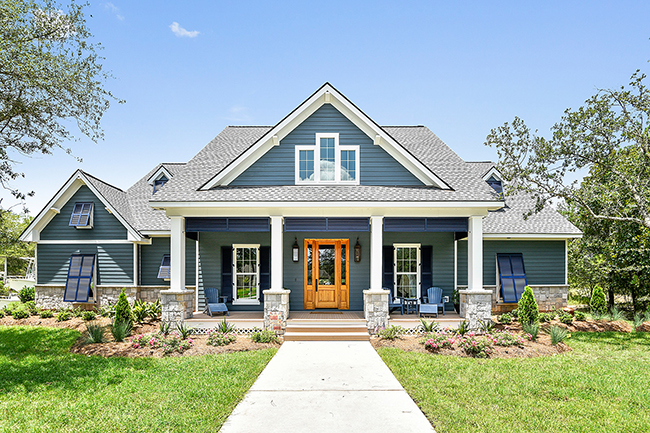
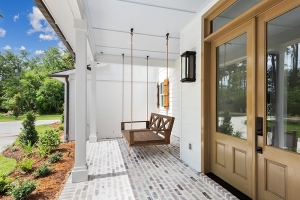
According to the Federal Reserve Bank of Kansas City single-family home construction is in store for a bright future.  A new study found that the years of underbuilding will come to an end.  This has left us in a deficit estimated at more than one million homes according to the National Association of Home Builders.The ceiling of this covered front porch is made of beam boards. The front porch swing is a perfect place to rock the evening away.
Jordan Rappaport, a senior economist at the Federal Reserve Bank of Kansas City, points out several points that align with the NAHB’s Home Building Geography Index data.  The key findings are on commute times, telework and home construction.  Those that work in a large metropolitan area, say that the largest concern about the suburbs is the commute.  The benefit is hybrid working which reduces commute time and expense.

The reduction in commuting will encourage more single-family permits but it will be a slow increase.  There are many headwinds that the National Association of Home Builders has reported that will prevent a quick boost in permits.  For example, when single-family construction begins to rebound, supply constraints are likely to slow its climb to its predicted long-term rate.  Moreover, shortages of workers, construction materials, and ready-to-build lots are all likely to constrain the growth of single-family construction in the short term.

Even with pushback, the jump in the construction of single-family homes will provide a long-term growth period for home building.  Once single-family home construction begins to ramp up, it is predicted to remain high for years to come.

Click Here For the Source of the Information. 

Monday, December 20, 2021

This Fall Saw a Gain in Single-Family Permits

 This September has seen a gain in single-family permits. The first nine months of 2021 reported year-to-date (YTD) got up to 864,184. This is a 21.2% increase from the 713,286 reported in September 2020.


All four regions had a very strong increase year-to-date ending in September 2021. The South saw the largest increase of 22.8% while the Midwest reported the lowest at 16.1%. The Northeast reported 20.4% and the West 20.3%. For multifamily permits, the West reported 35.3, Midwest 26.7%, the South 24.5% and the Northeast 17.7%.

Of the four regions, 49 states and the District of Columbia reported an increase of single-family permits issued. The highest growth was in the District of Columbia with a 234.7% increase! Mississippi was the only state that saw a decline of 0.5% during September 2021.

At the local level, below are the top 10 metro areas that issued the highest number of single-family permits.

Metropolitan Statistical AreaSingle-family Permits: (Units #YTD, NSA)
Houston-The Woodlands-Sugar Land, TX40,255
Dallas-Fort Worth-Arlington, TX39,161
Phoenix-Mesa-Scottsdale, AZ27,534
Atlanta-Sandy Springs-Roswell, GA24,928
Austin-Round Rock, TX19,250
Tampa-St. Petersburg-Clearwater, FL15,444
Charlotte-Concord-Gastonia, NC-SC14,767
Orlando-Kissimmee-Sanford, FL12,725
Jacksonville, FL12,725
Nashville-Davidson–Murfreesboro–Franklin, TN12,625

Click Here For the Source of the Information.

Monday, December 14, 2020

September Sees Gains in Single-Family Permits

 September 2020 brought a 10.2% increase over September 2019 in single-family permits issued year-to-date (YTD) according to the U.S. Census Building Permits. In fact, the report shows that over the first nine months of this year, the total nationwide climbed to 713,286.

As for each region of the country, the year-to-date ending in September varied. For single-family permits the Southeast saw the highest increase at 12.4%, the Midwest came in at the second-highest


with a 10% increase, the West had a 6.3% increase and the Northeast saw the smallest increase at 6.2%. Multifamily permits did not fair so great. Every region saw a decline with the biggest decline in the West at -9.4%, the Northeast had a decline of -7.5%, the South at -5.6% and Midwest had a decline of -2.7%.

Among the states, only 42 states had a growth in single-family permits while the remaining 8 states and the District of Columbia resulted in a decline. The record highest growth was seen in South Dakota from 2,186 to 2,885 making this a 32% increase. The District of Columbia saw the steepest decline with a 22.2% drop from 126 to 98.

The multi-family sector was not so lucky. YTD only 18 states showed growth while the remaining 32 states and the District of Columbia showed a decline. Mississippi had the biggest increase from 246 to 588 while New Hampshire had the largest decline from 1,148 to 386.

The top 10 metro areas with the highest number of single-family permits were:

Metropolitan Statistical Area Single-family Permits: Sep (Units #YTD, NSA)
Houston-The Woodlands-Sugar Land, TX 35,309
Dallas-Fort Worth-Arlington, TX 31,631
Phoenix-Mesa-Scottsdale, AZ 22,566
Atlanta-Sandy Springs-Roswell, GA 20,013
Austin-Round Rock, TX 15,327
Charlotte-Concord-Gastonia, NC-SC 13,258
Tampa-St. Petersburg-Clearwater, FL 11,683
Orlando-Kissimmee-Sanford, FL 11,367
Nashville-Davidson-Murfreesboro-Franklin, TN 10,429
Washington-Arlington-Alexandria, DC-VA-MD-WV 9,933

The top 10 metro areas with the highest number of multifamily permits were:

Metropolitan Statistical Area Multifamily Permits: Sep (Units #YTD, NSA)
New York-Newark-Jersey City, NY-NJ-PA 31,160
Houston-The Woodlands-Sugar Land, TX 15,967
Austin-Round Rock, TX 15,294
Los Angeles-Long Beach-Anaheim, CA 12,095
Miami-Fort Lauderdale-West Palm Beach, FL 11,994
Dallas-Fort Worth-Arlington, TX 11,862
Phoenix-Mesa-Scottsdale, AZ 10,717
Seattle-Tacoma-Bellevue, WA 10,580
Nashville-Davidson–Murfreesboro–Franklin, TN 8,256
Minneapolis-St. Paul-Bloomington, MN-WI 7,881

Click Here For the Source of the Information.

Thursday, June 25, 2020

A Rise In Home Building In Rural Markets

The National Home Builders Association (NAHB) has seen a new housing trend with the COVID-19 pandemic. The latest quarterly NAHB Home Building Geography Index (HBGI) found that residential construction is growing faster in lower density markets.

“We expect the virus could affect future housing preferences for those currently living in the hardest-hit, high-density environments like central cities and that housing demand will continue to increase in medium- and low-density communities,” said NAHB Chairman Dean Mon.

“The first quarter HBGI data reveals that construction growth expanded over the last year more quickly in low population density areas than high-density regions,” said NAHB Chief Economist
Robert Dietz. “This trend will continue as households seek out single-family homes further from urban cores, particularly as telecommuting continues in greater numbers.”

The report reveals that proximity and affordability were two of the biggest catalyst in the shift. People are now second-guessing living in metropolitan areas after the public health crisis hit. During the COVID-19 pandemic, metro residents were more vulnerable because of the crowded living conditions, mass transit, insufficient health and public sector infrastructure. Builders are starting to look outside of metropolitan areas where the land is cheaper and there are more building opportunities.

“The HBGI data is consistent with the fact that housing costs are increasing fastest in large metro suburban counties and smaller metro areas with populations under 1 million where demand for housing is high but supply constraints are tight,” said NAHB Chief Economist Robert Dietz.

“Supply-side issues that are hurting affordability and raising costs for builders include excessive regulations, labor shortages, rising material costs and a dearth of buildable lots in mid- to high population centers.”

All national economic geographies in the country showed a 9.1% growth increase in the suburbs over a one-year moving average. In the education and health services sector (EHS), 4% made up the total single construction and made up close to twice the growth rate in the multifamily construction over the past year. The HBGI also found that the education and health services sector was the top quartile of counties and totaled 25.7% above the total employment sectors.

Click Here For the Source of the Information.

Tuesday, August 27, 2019

Lower Mortgage Rates Encourages Gains In Existing Home Sales

New home sales are on the rise but the existing home sales are keeping up. According to the National Association of Realtors (NAR) total existing home sales reported a seasonally adjusted annual rate of 5.42 million.

The NAR reported that on a year-over-year basis, existing home sales were 0.6% up than a year ago which included single-family homes, townhomes, condominiums and co-ops. This is the first year-over-year gain in almost a year and a half.

Homes stayed on the market 29 days in July 2019 with 51% of homes on the market selling in less than a month. All-cash sales composed 19% of transactions up from June 2019. Median sale price of
existing homes in July was up 4.3% from a year ago at $280,000 and existing condominium/co-op prices were up 2.5% with a median price of $254,300.

Sales by regions saw an increase, except for the Northeast and West, for existing homes sales in July 2019. Existing home sales in the Midwest grew 0.8% and in the South existing homes rose to 2.7%.
NAR has encouraged the market to add more inventory which is a good sign. The falling mortgage rates, July 2019 at 3.77%, and lower home prices are a big plus.

“We are optimistic that the latter part of this year and the early months of 2020, at least, will see a significant upturn in sales. That, in turn, will boost construction activity in due course,” wrote Ian Shepherdson, founder and chief economist of Pantheon Macroeconomics, in a research note.


Click Here For the Source of the Information.

Thursday, August 11, 2016

National Lot Size Average Helps Builders and Home Buyers

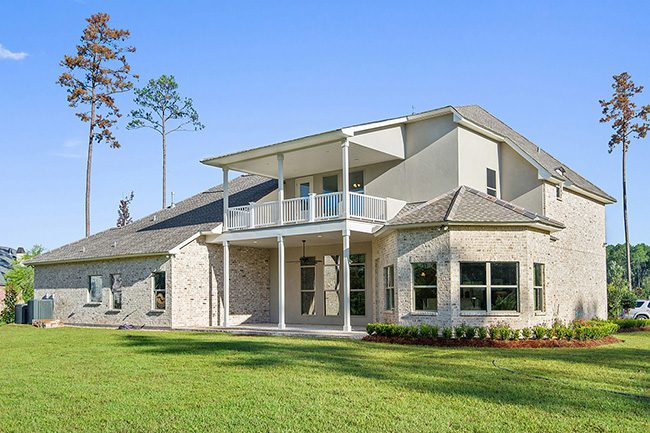
16-12 Bedico Creek Rear of HomeThe number of jobs available in the construction sector have become a positive “negative” for the United States’ real estate market.  Employers are reporting more open positions for construction employees and sub-contractors.  This shortage of workers is actually contributing greatly to the slow completion of new homes for sale on the market.  However, new home sales for single-family detached homes has increased 13% year-over-year, reporting 592,000 homes completed in June, 2016.  Lot size has also started to play a role in the completion of  new homes for builders in an unexpected way. The lack of developed lots has also slowed down new home builders as they are trying to keep up with the demand from new home buyers in the housing market.

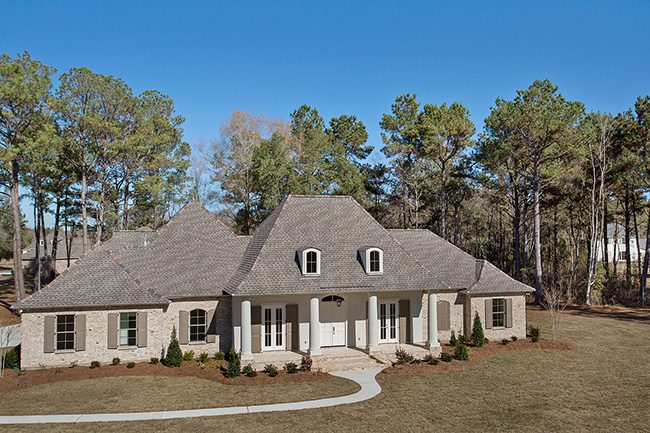
2-229 Bedico Creek Exterior FrontHowever, there is a “silver lining” to the lack of developed lots.  Builders may find that they don’t have to look as hard for lots on which to build because the Census Bureau’s Survey of Construction (SOC) found that new home buyers preferred lots that were less than 8,600 square feet – approximately 1/5-acre lots.  Since an acre is 43,560 square feet, this means that approximately 5 homes could fit comfortably on a space the size of a football field.  This is also good news for first-time home buyers.  The types and sizes of homes that would fit on a 1/5-acre lot would probably fall within the price range of the first-time home buyers.  Most builders paying attention to housing trends build new homes based on buyers’ preferences.  As lot sizes decrease, the availability of affordable housing has the potential to increase.

In Louisiana, the SOC reported that new home buyers buying single-family homes in Louisiana prefer lot sizes that are .16-acre.  This is less than the national trend of 1/5 acre.  Ron Lee Homes in St. Tammany Parish Louisiana can design and build you a completely custom new home either on a lot you already own or on any new lot for sale in the new subdivisions in the West St. Tammany Parish area.  We also have garden home floorplans and smaller square footage floorplans that have been designed and engineered for smaller lots.  New home buyers frequently modify our previously designed floorplans to their specifications in order to have Ron Lee Homes build the home of their dreams.  If you already own your lot or would like to buyer a lot in one of the many neighborhoods throughout the St. Tammany Parish area, Contact Us Today, Call 985-626-7619 or E-mail Info@RonLeeHomes.com.

Click Here and Here for the Sources of the Information.

Monday, June 13, 2016

National Association of Home Builders Announces Positive Housing Recovery

According to the National Association of Home Builders’ (NAHB) Leading Markets Index (LMI), the national housing market is within a 5% range of complete housing recovery compared to what is considered a “normal” housing market which the United States last saw in 2006.  Out of a score of one, the latest LMI scored a .95 nationwide in housing recovery.

How is the LMI Calculated?

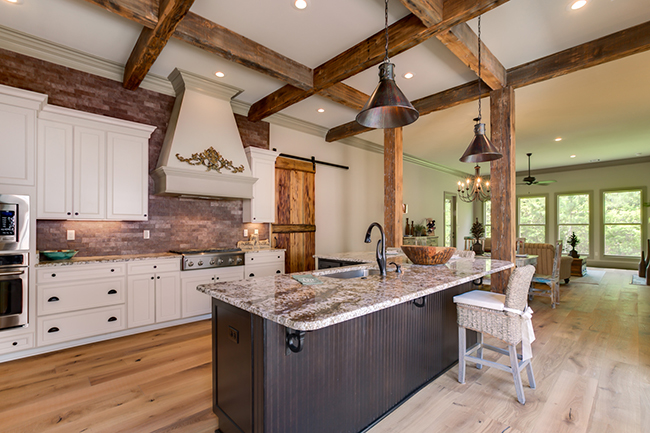
5-Lot 91 Maison du Lac Rustic Kitchen Design with GraniteThe way that the LMI makes a numeric determination is taking statistics of single-family housing permits, employment, and home prices calculated for the entire country and specifically 337 local markets.  Single-family home permits rose from .48 to .49, new home prices increased from 1.38 to 1.40, and employment rose from .96 to .97.  The really good news is that approximately 35% of the 337 markets have a score that exactly equaled 1 or is greater than 1.

The number of markets which increased overall in single-family home permits in a year-over-year comparison rose by almost 65%. Employment numbers increased 71%.  Three hundred twenty-four markets out of the 337 are now showing new home pricing that is considered normal according to the last data recorded in a normal real estate market in 2006.

For communities located in Louisiana, almost all counties accounted for were located in the top 20% of housing rankings.  Approximately 4 areas were in the top 60% – 80% rankings relative to normal housing numbers for new home permits, employment and new home pricing.  Louisiana overall experienced a far softer impact of the slowdown in housing market numbers of the Recession than other states in the United States.  Baton Rouge consistently ranks in the top 10 cities in the United States with the best recovery numbers to date.

Click Here for the Source of the Information. 

Monday, February 22, 2016

Home Buyers Seeing Upward Trends in Real Estate

During the first month of the year 2016, home buyers have a lot to be excited about when considering buying a new home for sale.  Home pricing, consumer confidence, and home construction starts and permits are all up!  The housing market has been seeing a steady incline since it bottomed out between 2009 and 2011.  With sharp, record-breaking price increases in 2012 and 2013, the housing market almost seemed to be expanding too fast for consumer demand, consumer affordability, and consumer credit.  However, home pricing trends have “flattened” in 2014 and 2015 creating stability in the real estate market.
028During the month of October, 2015, home prices rose at 6% and 11% depending on which report buyers were seeing.  The Case Shiller (CS) National Home Price Index released by S&P Dow Jones Indices showed an 11% increase in October while the more conservative Home Price Index from the Federal Housing Finance Agency (FHFA) rose 6%.  Either way, home pricing has stabilized and is on the upswing which is good for both buyers (a smart investment) and sellers.

Meanwhile, the vote of confidence from consumers showed an increase of approximately 4 points in December after 2 months of declining numbers.  The Consumer Confidence Index by the Conference Board rose from 92.6 to 96.5 from November to December.  The index shows that consumer confidence is growing back to pre-Recession levels.

Finally, construction housing starts and permits for 2015 were up 10.8% year-over-year to equal to 1.11 million.  Single-family home starts were up 10.4% and multi-family housing starts were up 11.4%.  The single-family home starts numbers came to 715,300.  Increases were seen in all 4 reported regions of the United States for single-family homes.  Housing permits were also up compared to 2014 by 12% with a total of 1.18 million.  Single-family home permits were up by 7.9%, and multi-family home permits were up by 11.4%.  In December, single-family home permit numbers were up by 1.8% compared to November as well.

All signs point to a solidly recovering housing market nationwide, and here in St. Tammany Parish, the custom home business is thriving with many new exciting projects for 2016.  If you are interested in building or buying a new, custom home, Contact Us at 985-626-7619 or E-mail Info@RonLeeHomes.com.

Click Here, Here, and Here for the Sources of the Information.

Tuesday, September 15, 2015

Housing Market is Still on the Rise

7-Lot 104 Maison du Lac Family Room 2The housing market is still on the rise and continues to improve according to the findings by the NAHB/First American Leading Markets Index (LMI).  The LMI was developed to record and monitor the recovery of select markets throughout the United States due to the Recession. There are three components (average permit, price and employment levels) that are scored in more than 360 metro areas over a 12 month period.  The scores for these components are then divided by each of their annual averages over the last period of normal growth.  The three component averages are then averaged together giving the overall score for each market.  For single-family permits and new home prices, 2000-2003 is used as the last normal period, and for employment, 2007 is used for the last normal period.

What all of this means in a nutshell is that major metro cities throughout the United States are being monitored for an increase or decrease in real estate activity following the Recession.  The percentages are calculated each month by the National Association of Home Builders and distributed amongst the public and real estate markets so that investors have an idea of how the real estate recovery is progressing nationwide.

9-54 Maison du Lac Living Room 2Baton Rouge, Louisiana is one of the top recovering cities on the list of major metros on the LMI and is doing 47 percent better than the last findings recorded for the normal market level.  Southeast Louisiana shows an 85 to 92 percent recovery to the normal market level.  In fact, 75 markets out of the 360 metro areas beat their last normal levels of economic and housing activity during the second quarter this year which showed a year-over-year net gain of 13 markets (66% of markets have shown an improvement year over year).  This quarter’s LMI shows that more than half the markets nationwide have reached a 90% or above their normal market level. We are almost back to 100% of normal economic and housing activity that we had before the recession.

“The markets are gradually improving and economic and job growth continue to strengthen, which bodes well for housing for the remainder of the year,” said NAHB Chairman Tom Woods.

Out of the three components of the LMI, housing prices have shown the strongest recovery with 345 markets at the same or above their last normal level. Behind that is the economic level where 64 markets are at their normal market level or have exceeded their normal market level. Housing permit level is lagging behind with only 26 markets at normal or above normal market level.

Click Here to View This Article on Our Website.