
Wednesday, May 26, 2021

FEBRUARY 2021 SEES A GAIN IN SINGLE-FAMILY PERMITS


The first two months of 2021 not only saw a strong housing market but 164,901 single-family permits issued year-to-date (YTD). The report shows that there is a 16.6% increase over February 2020.

Permits for residential single-family and multi-family 12 months change February 2021 year-to-date is different throughout each U.S. region. Single-family permits and multi-family permits increased in all four regions in February. For single-family Midwest had an increase of 24%, in the Northeast a 20.1% increase, the South had a 16.2% increase and the West came in last with a 13.6% increase. Multi-family saw the biggest increase in the West at 22%, next the South with an 18.4% increase, Northeast at 17.5% and the Midwest saw the lowest at only a 5.4% increase.

The District of Columbia saw the biggest increase in single-family permits issued YTD from February 2020 to February 2021 at 308.3%. Vermont saw a decline in single-family permits of 17.7%. The ten states that issued the highest number of single-family permits accounted for 63.8% of the total. Forty-four states and the District of Columbia had an increase in single-family permits between February 2020 YTD and February 2021 YTD.

Multi-family permits issued across the country in February 2021 YTD reached 83,110 which was 17.7% more than the reported 70,635 in February 2020. Thirty-six states and the District of Columbia had an increase while 14 states had a decline. The highest increase was seen in New Mexico with a 714.3% increase and Nebraska saw a huge decline of 66.9%. The ten states that had the highest number issued accounted for 66.4% of the total.

Click Here For the Source of the Information.


THERE ARE TONS OF FINANCIAL BENEFITS IN HOMEOWNERSHIP


According to a survey done by
 Fannie Mae, homeownership is highly rated by consumers. In fact, they continue to see homes as a safe, high potential investment.  The Fannie Mae Q4 2020 National Housing Survey reported that consumers believe it is just as safe to invest in a home as savings and money market accounts.

The survey found that consumers relayed that the top four financial benefits of homeownership were a better chance of saving for retirement, the best investment plan, the chance to be better off financially and the chance to build up wealth. Of these four benefits, 88% of consumers felt it gave a better chance of saving for retirement, 87% felt it was the best investment plan, 85% felt it gave them a chance to be better off financially and 85% believe homeownership presented them a chance to build up wealth.

Consumers’ opinions are right on the money so to speak. The Federal Reserve’s Survey of Consumer Finances revealed that owning a home is a “clear financial benefit.” In the survey, it was reported that those who owned a home vs renting had a forty times higher net worth. As the housing market grows stronger, the gap between renters’ and homeowners’ net worth grows farther apart. Corelogic reported that the equity in homeownership grew by $26,300 over the last year which widened this gap even further.

Keeping Current Matters released data showing the gap in the net worth in every income category between homeowners and renters. For a homeowner making under $26,000 their net worth is $103,000 but a renter’s net worth is only reported at 1,000, homeowner’s making $26,000 – $46,000 their net worth is $140,000 and a renter making the same income net worth is $6,000, homeowners making $46,000 – $74,000 have a net worth of $190,000 while renters only have $11,000, homeowners making $74,000 – $127,000 have a net worth of $261,000 and renters only $34,000, homeowners making $127,000 – $192,000 have a net worth of $433,000 while renters making the same income have a net worth of $117,000 and homeowners making over $192,000 have a net worth of $1.66M while renters only $705,000.

Homeownership is a solid financial investment opportunity but should you choose to purchase a home, the best thing to do is use a local real estate professional. A Realtor can help you take the next steps towards homeownership.

Click Here For the Source of the Information.

Thursday, May 13, 2021

STRONG BUYER DEMAND BUILDS UP BUILDER CONFIDENCE


The latest National Home Builders Association/Wells Fargo Housing Market Index (HMI) reported that builder confidence increased in April 2021. For newly-built single-family homes, builder confidence was at an 83 in April.

The NAHB/Wells Fargo HMI surveys builders’ views on how the current single-family home sales and sales expectations for the next six months. The builder's rate as good, fair or poor. When asked about the traffic seen of prospective buyers, they rate it as high to very high, average or low to very low. Once the data is collected,  scores for each component are then used to calculate a seasonally adjusted index where any number over 50 indicates that more builders view conditions as good than poor.

Today’s market is seeing an 88 for current sales conditions even with the high lumber prices and supply chain problems. For the traffic of prospective buyers, there was a three-point gain to 75. As for the different regions the Northeast was at 86 points, the South at 83 points, the West at 90 points and the Midwest came in at 78 points.

“Despite strong buyer traffic, builders continue to face challenges to add much-needed housing supply to the market,” said NAHB Chairman Chuck Fowke. “The supply chain for residential construction is tight, particularly regarding the cost and availability of lumber, appliances, and other building materials. Though builders are seeking to keep home prices affordable in a market in need of more inventory, policymakers must find ways to increase the supply of building materials as the economy runs hot in 2021.”

“While mortgage interest rates have trended higher since February and home prices continue to outstrip inflation, housing demand appears to be unwavering for now as buyer traffic reached its highest level since November,” said NAHB Chief Economist Robert Dietz. “NAHB’s forecast is for ongoing growth in single-family construction in 2021, albeit at a lower growth rate than realized in 2020.”

Click Here For the Source of the Information.
Monday, May 10, 2021

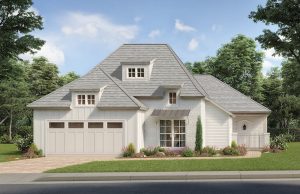
NINETY PERCENT OF NEW HOME SALES IN Q1 2021 WERE BACKED BY CONVENTIONAL AND FHA MORTGAGES


The recent Quarterly Sales by Price and Financing, published by the U.S. Census Bureau, was analyzed by the National Association of Home Builders and found
 that conventional loans financed the largest share of new home sales since 2018.

Conventional loans in Q1 2021 were reported at 71.6%, FHA came in at 19.3%, VA loans at 5.3% and cash new home sales were 4.1%. As far as the percentage points increase from Q1 2020, conventional loans rose 2.1 percentage points and FHA-backed sales were up 1.6 percentage points. Unfortunately, VA loans decreased 2.1 percentage points and cash sales dipped 0.9 percentage points.

The four-quarter moving average (MA) of the share of new home sales backed by FHA has increased over the past two and a half years from 12.2% to 18.9%. Conventional loans however have seen a 4.4 percentage points decrease during the same period.
Even with a small increase, interest rates are still at historically low levels. The stock market returns topping 20% from Q1 2020 to Q1 2021 have played important roles in the large increase in the number conventional loan and cash purchases relative to sales financed through the FHA and VA.

Now is a great time to purchase a home with low interest rates and in turn a great time to also sell. The national median sales price for a new home reported was $347,500 and those homes sold back by financing were $386,600.
Click Here For the Source of the Information.

Tuesday, April 20, 2021

High-Performance Home Appraisal Guide

Photo by John Tekeridis from Pexels


High-performance homes are becoming more and more popular, but is the market up to date with appraisals for these specialty homes? Builders, sales agents and homeowners can take several steps to ensure local appraisers, lenders and the general public about what makes your durable, energy-efficient, healthier home stand out from the competition.

Step 1:

Make sure to highlight the home's high-performance features when marketing the home. This can be done by advertising, educating, teaching, highlighting and displaying these high-performance features.

When advertising, make sure to include the features that make the home more comfortable, energy-efficient and water-efficient. Point out how these will help lower utility bills. For tips on verbiage to use or ideas on what to highlight, check out Home Performance Counts.

Educate and teach others about the results of an Energy Rating Index (ERI) which includes the Home Energy Rating System (HERS) score or Home Energy Score (HES). All sales agents and sales staff should know what an ERI, HERS and/or HES rating means and how to articulate the ratings to consumers and others in the industry.

Features such as independently verified green home certifications should be highlighted in the marketing materials. The National Green Building Standard is a great example that should be put on flyers and web pages. During open houses, display the ERI, HERS or HES ratings and an explanation of the potential energy savings. Also, display certification plaques that show the home is approved by the National Green Building Standard.

Step 2:

Buyers should choose a lender who is familiar with high-performance homes. Local mortgage lenders who have a separate appraisal panel of trained professionals with experience valuing high-performance homes are critical to get the value your above-code home deserves. It is important for a lender to choose an appraiser that is on the Appraisal Institute’s green registry. This way both the lender and appraiser will not be hesitant to appraise the home higher for its energy-efficient upgrades.

Step 3:

The sales contract for a high-performance home should include Residential Green and Energy Efficient Addendum. What this means is the high-performance features that are behind the walls and cannot be seen will be included. This documentation will help the appraiser fully understand the higher price when it comes to an above-code home.

Step 4:

Just like interviewing a sales agent, interview the appraiser before you choose them to appraise the home. Not only ask about their appraisal experience but also ask if they are familiar with ERI scores and HERS ratings. Find out what classes or courses they have taken on high-performance valuation.  The Federal Housing Administration, the U.S. Department of Veterans Affairs, Fannie Mae and Freddie Mac all require that the appraiser has requisite knowledge prior to accepting the assignment, and the only way to enforce that is to ask about their knowledge and experience upfront.

Including these steps in the appraisal process will ensure a high-performance home will be given the right amount the home is worth. Choosing a sales agent who is versed in energy-efficient homes will help buyers with the home buying process.

Click Here For the Source of the Information.

Monday, April 19, 2021

Suburbs Are The Place To Be

 The National Association of Home Builders NAHB recently did a survey that revealed 25% of home buyers have changed their home buying preferences due to COVID-19. The survey found that home buyers are looking to the suburbs because of the health crisis. Thiry percent of buyers are seeking a home in the outlying suburbs. Before the pandemic, only 26% of home buyers wanted to purchase a home in the suburbs.

This does not bode for other locations. All of the other location points saw no change or small declines in buyer's preferences after the onset of COVID-19. Rural areas went from 24% down to 23%, downtown in a central city, dwindle from 12% to 11% and those who desired a home in the central city outside of downtown remained at 9%.

Buyers should enlist the help of a Realtor. A local sales agent will know the suburbs and can help you find the perfect home of your dreams. They will be able to help find a home in the perfect community for the perfect price.

Click Here For the Source of the Information.

Thursday, April 15, 2021

Spring A Great Time To Sell A Home

Photo by Andre Furtado from Pexels


Spring brings new flowers, animals, and warm sun. Many say that spring is the time for changes. The housing market also sees a rise in home sales during this time. Here are five reasons why springtime is the best time to sell.


1. There's high demand from homebuyers.

Showingtime, an app that tracks showings on homes, reported that buyer showings are up 51.5% from this time last year. The housing market is hot and buyer demand is strong.

“As anticipated, demand for real estate remains elevated and continues to be affected by low levels of inventory…On average, each home is getting 50 percent or more requests this year compared to January of last year. As we head into the busy season, it’s likely we’ll push into even more extreme territory until the supply starts catching up with demand,” says Daniil Cherkasskiy, Chief Analytics Officer at ShowingTime.

2. There aren't enough houses for sale.

Inventory is on a record low, and buyers are high on demand. “Nationally, the inventory of homes for sale in February decreased by 48.6% over the past year, a higher rate of decline compared to the 42.6% drop in January. This amounted to 496,000 fewer homes for sale compared to February of last year,” reported Realtor.com.

According to the National Association of Realtors (NAR) "sales are skyrocketing" and the existing inventory is "continuing to drop dramatically". The average house is only staying on the market for only 21 days.

3. You have a lot of leverage in today's market.

Low inventory and tons of buyers make this a seller's market. The seller currently has the upper hand in the market and can negotiate the best deals. NAR reports that bidding wars have increased on average by 3.7 offers per house.

4. It's a great way to use your home equity.

CoreLogic reported that the average homeowner gained $17,000 in equity over the past year, and that number continues to grow as home values appreciate, in the third quarter of 2020. During this market, homeowners will find that they have a lot of equity in their homes. Equity is a type of forced savings that grow during your time as a homeowner and can be put toward bigger goals like buying your next dream home.

“As homeowners gain equity in their homes, they are more likely to consider using that equity to purchase a larger or more attractive home – the wealth effect of rising equity. In today’s housing market, fast-rising demand against the limited supply of homes for sale has resulted in continued house price appreciation,” says Mark Fleming, Chief Economist at First American.

5. It's a chance to find a home that meets your needs.

The COVID-19 pandemic has changed the way homeowners see and live in their homes. The stay-at-home orders meant spending a lot of time at home. This extra time at home caused homeowners to re-evaluate the top desires they want in a home.

The home office, outdoor spaces and flex rooms became a must in the 2021 home search. With so many people working from home, or virtual schooling flex rooms and home offices are in high demand.

If you are in the market to sell your home, contact your local Realtor. A Realtor will not only help you navigate the market, getting you the best price and deal for your home, but will also take most of the pressure off of you from this fast pace market.

Click Here For the Source of the Information.